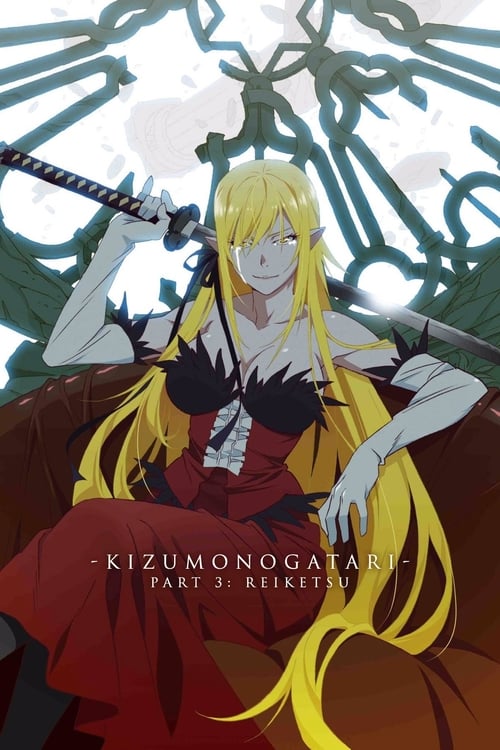
Kizumonogatari Part 3: Reiketsu
2017
No user ratings available yet
Representation score: 4.6 out of 10
Representation Score
Fair
2016
18+Director
Tatsuya Oishi, Akiyuki Shinbo
Runtime
68 minutes
Average Rating
No ratings yetNew Showbiz Analysis
The film prioritizes psychological depth and postmodernist deconstruction over demographic breadth. It succeeds in challenging traditional gender hierarchies by presenting women as powerful, dominant forces rather than passive figures. However, the work remains culturally and ethnically narrow, operating within a localized Japanese setting. The lack of explicit LGBTQ+ narratives and racial diversity limits its scope. Ultimately, the film's strength lies in its metaphorical exploration of bodily alienation and moral ambiguity, even as it lacks broad representation across other social categories.
Category Breakdown
The story centers around the protagonist's struggle to maintain humanity but lacks explicit representations of non-traditional gender identities or narratives that challenge the assumption that everyone is straight.
Female characters such as Kiss-shot and Hanekawa play significant roles and possess supernatural abilities that often overshadow the protagonist, avoiding the damsel in distress cliché.
The setting is a contemporary Japanese urban environment with a homogeneous cast. The narrative operates within a localized cultural framework without engaging in racial blending.
The film uses moral relativism to depict monsters as complex expressions of human desires. It lacks explicit critiques of Western institutions, focusing instead on internal metaphysical struggles.
Vampirism serves as a metaphor for physical and psychological impairment. The narrative explores bodily alienation and the struggle to navigate a world that no longer accommodates the protagonist's reality.
Present on Screen
Limited or Absent
Official Synopsis
Koyomi Araragi was turned into a vampire by the legendary vampire, Kiss-shot Acerola-orion Heart-under-blade, and he needs to revive the weakened vampire back to her complete form to return to being human again. The only way for Koyomi to achieve his goal is to fight the three vampire hunters – Dramaturgy, Episode and Guillotinecutter.
2017
2016

2024
2012

2024

2009
No reviews yet. Be the first to share your thoughts on this movie!
Use the rating form above to leave a star rating and optional review.