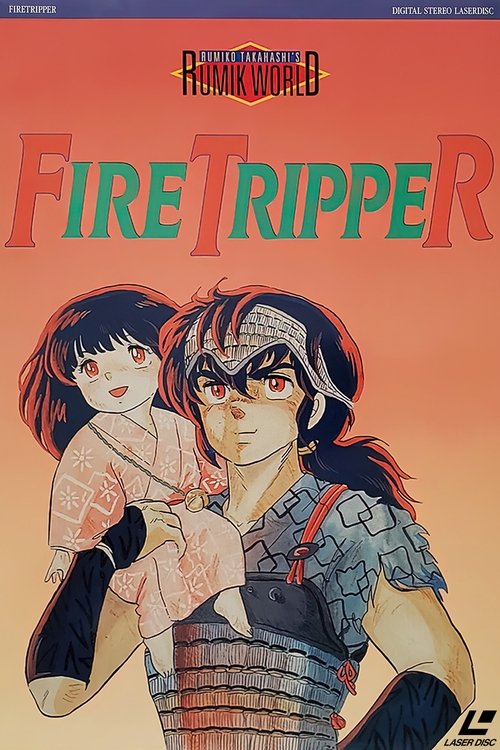
Fire Tripper
1985
No user ratings available yet
Representation score: 4.9 out of 10

Representation Score
Limited
1986
Director
Mori Masaki
Runtime
91 minutes
Average Rating
No ratings yetNew Showbiz Analysis
Time Stranger is a high-concept science fiction adventure that emphasizes disrupting historical continuity over diverse social representation. The film excels in its postmodern exploration of time and its critique of institutional control through a disruptive protagonist. However, the character dynamics rely heavily on traditional structures, with female characters often relegated to reactive roles rather than active ones. The film also lacks multi-layered character development, focusing more on a chronological experiment than on underrepresented identities.
Category Breakdown
The film does not include explicit representations of non-binary genders or same-sex romantic relationships. It follows a traditional adventure storyline without challenging the assumption that everyone is straight or cisgender.
The story is primarily driven by a male character, Agino Jiro, who actively shapes the plot. Female characters like Teko tend to react to his actions rather than being active drivers of the story themselves.
The film focuses on a culturally specific Japanese identity across different historical periods. Despite the cast being ethnically uniform, the narrative explores disruptions in social order by placing characters in various time frames.
The storyline questions the stability of historical events by blending the future with the 1945 bombing campaign and the Warring States period. This approach challenges the idea of a fixed historical timeline.
The narrative does not feature characters dealing with physical, neurological, or mental health conditions.
Present on Screen
Limited or Absent
Official Synopsis
In the new Calendar Year of 392, in Neo-Tokyo, a young man, Agino Jiro, steals a time synchronization system and tries to escape to the past. The authorities give chase and damage his ship in the pursuit, forcing him to land in modern day Tokyo, Determined, he breaks into a van and attaches the device, recklessly kidnapping Nobucho, Shinichi, Teko and their teacher, Hokubei. Their initial resistance force lands them in Tokyo on March 9th 1945, during the US bombing campaign. Escaping again to the past the group eventually arrives at the Warring States period. There the future and the past collide as factions from Jiro's era seek to alter their past at a pivotal moment at Honnoji.
1985
1980

2004

1982
1979

2019

1984

2001
No reviews yet. Be the first to share your thoughts on this movie!
Use the rating form above to leave a star rating and optional review.