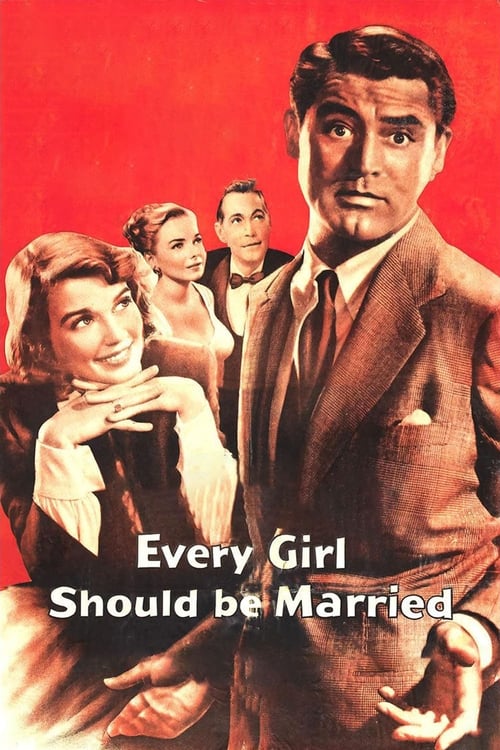
Every Girl Should Be Married
1948
No user ratings available yet
Diversity score: 2.6 out of 10

1943
NRDirector
Andrew L. Stone
Runtime
72 minutes
Average Rating
No ratings yetSynopsis
When the bride's mother is supposedly swindled out of her money by a spurned suitor, the groom's father orchestrates a scheme of his own to set things right. He is aided by a cabaret singer, while placating a jealous wife.
Overall Score
Limited
Category Breakdown
LGBTQ+ Representation
The film adheres strictly to heteronormative frameworks. There are no non-cisnormative gender identities or narratives that challenge traditional romantic structures.
Gender Representation
Character dynamics reinforce mid-century gender hierarchies. The plot focuses on matrimonial stability and traditional domestic roles rather than subverting power dynamics.
Racial & Ethnic Diversity
The narrative centers on a homogeneous social group. It reflects era-specific casting practices that prioritize Anglo-Saxon archetypes as the social norm.
Religious & Cultural Diversity
The story upholds traditional social cohesion and Western institutional stability. It focuses on protecting family assets and social standing through restorative schemes.
Disability Representation
The film does not utilize disability as a central narrative device. There is no evidence of disability being used as a source of comedic mockery.
Strengths
Areas for Improvement
AI Analysis
Hi Diddle Diddle is a conventional studio-era comedy that prioritizes escapism over social critique. The narrative architecture reinforces the established social and gender hierarchies of the 1940s rather than disrupting them. The film lacks intersectional complexity, focusing instead on traditional romantic tropes and domestic stability. It functions as a product of its time, maintaining the status quo through a homogeneous lens. Ultimately, the work serves as a lighthearted musical comedy that aligns with the conventional moral and socioeconomic standards of the mid-century studio system.
1948
1941
1948
1945

1948
1948
1948
1945

1937
1943
1937

1937
No reviews yet. Be the first to share your thoughts on this movie!
Use the rating form above to leave a star rating and optional review.