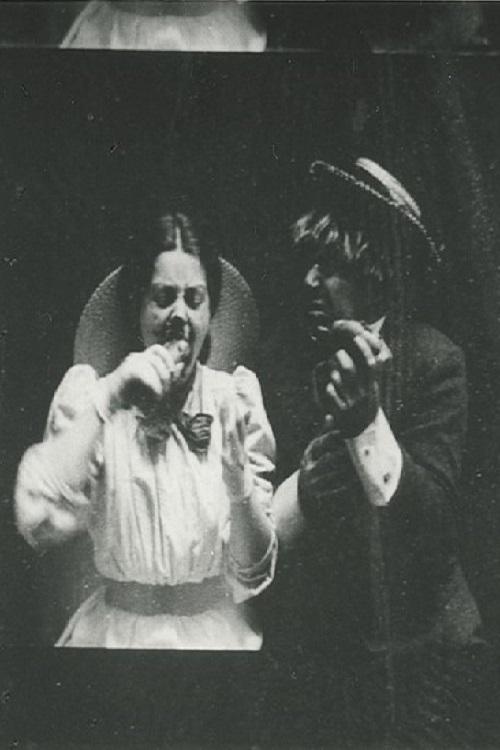
Rube and Mandy at Coney Island
1903
No user ratings available yet
Diversity score: 2.6 out of 10
No Poster Available
1904
Director
Edwin S. Porter
Runtime
8 minutes
Average Rating
No ratings yetSynopsis
A “madman” escapes prison and the torments of his warders.
Overall Score
Limited
Category Breakdown
LGBTQ+ Representation
The film lacks any evidence of LGBTQ+ characters or narratives. It adheres to the standard narrative structures of 1904, which provided no explicit queer visibility.
Gender Representation
The story focuses on male-centric archetypes of authority and chaos. There is no indication of female characters with significant agency or the subversion of gender hierarchies.
Racial & Ethnic Diversity
The production likely featured a homogeneous, white cast typical of the early studio era. There is no evidence of racial diversity or non-human species used as metaphors.
Religious & Cultural Diversity
The narrative uses the escaped prisoner trope to drive comedy without challenging Western institutions. It does not offer any progressive deconstruction of law or order.
Disability Representation
The 'madman' character relies on early cinematic tropes regarding mental health. This functions as a caricature for physical comedy rather than a nuanced portrayal of neurodivergence.
Strengths
Areas for Improvement
AI Analysis
Edwin S. Porter’s *Maniac Chase* is a product of its era, prioritizing kinetic action and slapstick tropes over social critique. The film operates within the narrow representational landscape of early silent cinema, focusing on a chase between a prisoner and his warders. Because the work predates modern frameworks of intersectional representation, it lacks intentionality in disrupting traditional hierarchies. The characters serve primarily as comedic devices rather than complex individuals. Ultimately, the film reflects the conventional social structures of the early 1900s, offering little in the way of diverse perspectives or meaningful representation.
1903
1947
1906
1927

1905
1907
1904
1898

1916
1915
1944
1927
No reviews yet. Be the first to share your thoughts on this movie!
Use the rating form above to leave a star rating and optional review.