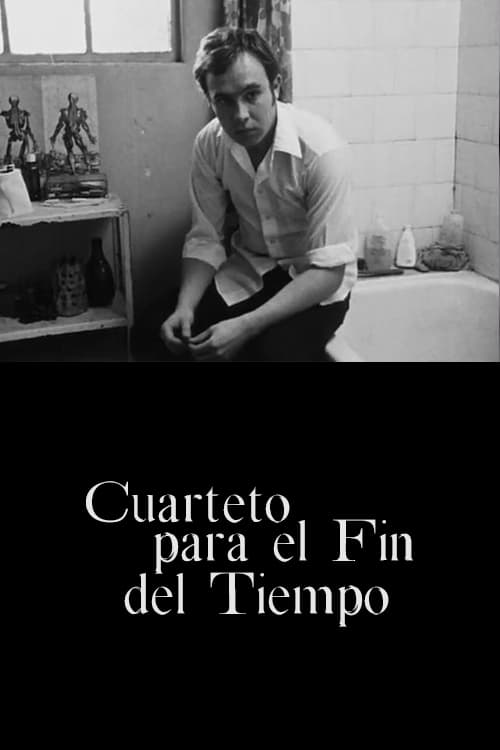
Quartet for the End of Time
1983
No user ratings available yet
Representation score: 4.3 out of 10

Representation Score
Fair
1974
Director
Bernard Queysanne
Runtime
78 minutes
Average Rating
No ratings yetNew Showbiz Analysis
The Man Who Sleeps is a deeply philosophical work that prioritizes existential inquiry over demographic breadth. It succeeds as a critique of Western social contracts, specifically challenging the necessity of economic productivity and social utility. However, the film's narrow focus on a single male perspective results in significant gaps in representation. The lack of diverse gender, racial, or LGBTQ+ identities makes the narrative feel socially isolated. Ultimately, the film trades social diversity for thematic depth, offering a sophisticated deconstruction of societal norms while remaining demographically homogeneous.
Category Breakdown
The film focuses almost exclusively on the protagonist's internal psychological state. There are no LGBTQ+ characters or stories exploring non-straight relationships.
The narrative centers on a single male experience, limiting gendered dialogue and diverse representation of women and non-binary individuals.
The film depicts a homogeneous urban environment in France. It lacks diverse casting and racial blending to challenge social norms.
The film offers a profound critique of Western institutional structures. It rejects capitalist productivity and prioritizes subjective, existential truth over communal or religious morality.
The protagonist's profound lethargy is treated as an existential choice rather than a clinical disability. It avoids stereotypes by presenting detachment as a valid mode of existence.
Present on Screen
Limited or Absent
Official Synopsis
A young student decides to have no more interaction with the world than is needed to minimally sustain life. His increasingly automaton-like behavior is coupled with a strange clarity of insight about the world around him.
1983
1972

1976

1967
1970

1966
1976

2024
No reviews yet. Be the first to share your thoughts on this movie!
Use the rating form above to leave a star rating and optional review.