The Police: Synchronicity Concert
1984
No user ratings available yet
Diversity score: 3.8 out of 10
1990
Director
Anton Corbijn
Runtime
30 minutes
Average Rating
No ratings yetSynopsis
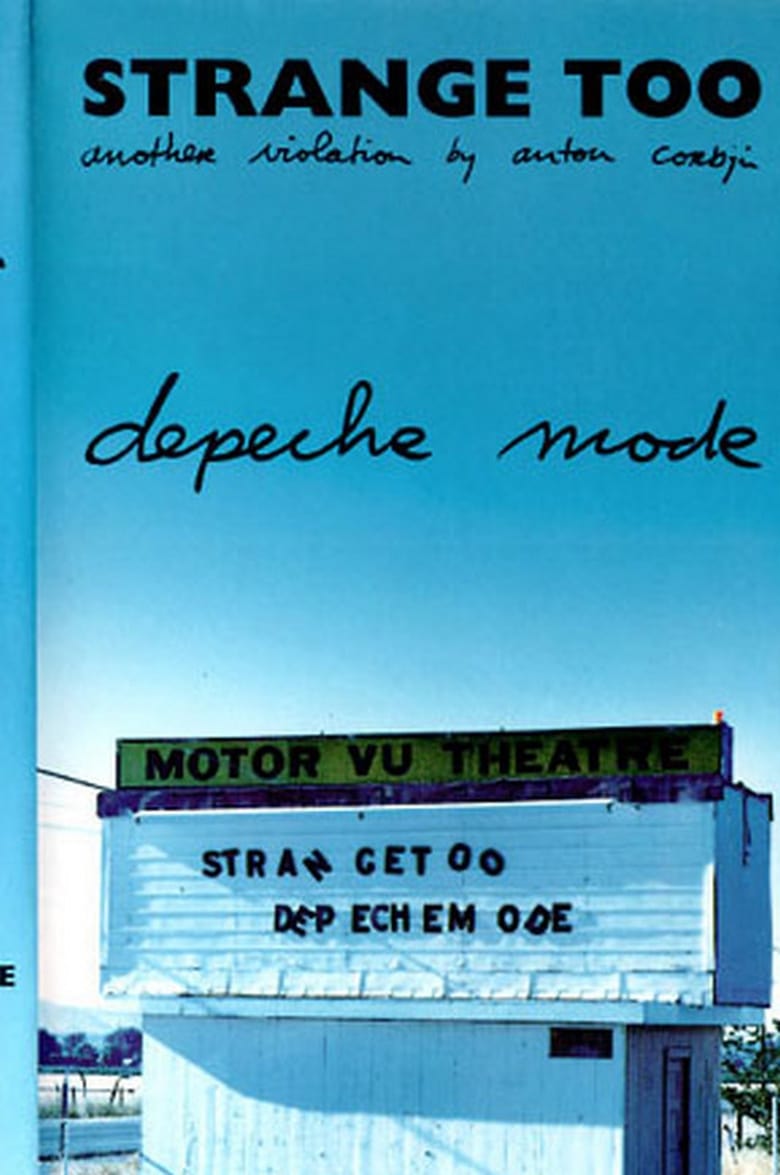
Strange Too - Another Violation by Anton Corbijn is the third music video compilation by Depeche Mode, featuring more videos directed by Anton Corbijn, released in 1990. Unlike the previous video, Strange, all the videos are fully in color. There are six videos, all songs from the album Violator, released in the same year. There is one for each of the four singles, plus two bonus videos, for "Halo" and "Clean", exclusive to "Strange Too". As with its predecessor, Corbijn shot all six videos in Super-8. The tallest woman in the "Halo" video is a young Jenna Elfman. The Drive-In featured in the introduction to the compilation is the "Motor Vu Drive-In", located in Erda, Utah, west of Salt Lake City, near the town of Tooele, this part of the video being shot the day after the band's concert in Salt Lake City in July, 1990.
Overall Score
Limited
Category Breakdown
LGBTQ+ Representation
The compilation focuses on the band's aesthetic identity rather than explicit social themes. While the music often evokes themes of longing, there is no documented depiction of same-sex intimacy or non-cisnormative identities.
Gender Representation
Narrative focus remains heavily centered on the male members of Depeche Mode. While Jenna Elfman appears in the 'Halo' video, the work largely bypasses gendered social dynamics in favor of stylized emotional landscapes.
Racial & Ethnic Diversity
The visual palette is relatively homogeneous, focusing on the band and specific American landscapes. There is no evidence of a diverse or non-Anglo-Saxon majority cast within the videos.
Religious & Cultural Diversity
The work adopts a postmodern, melancholic aesthetic that prioritizes subjective emotional truth. It moves away from traditionalist storytelling through surrealism, though it lacks explicit systemic or political critiques.
Disability Representation
There are no discernible depictions of physical or neurodivergent disabilities. Subjects are presented within a standard aesthetic framework without utilizing disability as a central theme.
Strengths
Areas for Improvement
AI Analysis
Anton Corbijn’s compilation is a work of aesthetic preoccupation rather than social commentary. It prioritizes a gritty, deconstructed Super-8 visual style that challenges commercial polish, yet this focus comes at the expense of demographic breadth. The collection is constrained by its narrow lens, centering almost exclusively on the band's persona and internal emotional states. This results in a lack of intentional representation across racial, gender, and LGBTQ+ spectrums. Ultimately, the film's value lies in its postmodern disruption of the music video format rather than its engagement with progressive social narratives.
1984
1987
1998

2005
2001
2003

2002
2002

1993
2006
2002
2008
No reviews yet. Be the first to share your thoughts on this movie!
Use the rating form above to leave a star rating and optional review.