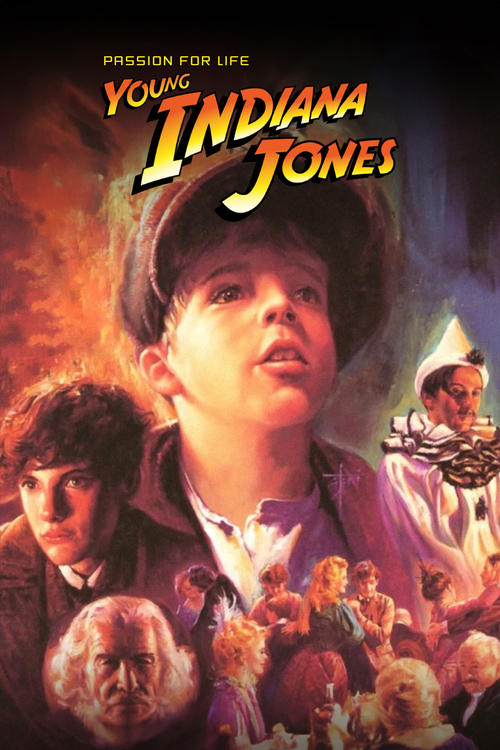
The Adventures of Young Indiana Jones: Passion for Life
2000
No user ratings available yet
Representation score: 3.0 out of 10
Representation Score
Limited
2000
Director
Mike Newell, Bille August
Runtime
93 minutes
Average Rating
No ratings yetNew Showbiz Analysis
The film serves as a historically accurate coming-of-age drama that prioritizes historical realism over modern social issues. By adhering to the social norms of 1912, it maintains the demographic homogeneity of the Edwardian era. While the inclusion of psychological figures like Freud and Jung adds intellectual depth, the narrative remains firmly rooted in Western, upper-class traditions. The representation of women and race reflects the era's established hierarchies rather than challenging them. Ultimately, the production functions as a conventional developmental arc that lacks the intention to disrupt systemic power dynamics or provide diverse identity visibility.
Category Breakdown
The story centers around heterosexual relationships, such as Indiana's interest in the Archduke's daughter. There are no representations of non-traditional gender identities or same-sex relationships.
Female characters, including Indiana's mother and the Archduke's daughter, have significant roles in the story through their romantic pursuits. However, their roles remain within traditional family and relationship frameworks.
The cast is primarily white and upper-class, reflecting the social hierarchy of 1912 Europe. The narrative does not explore racial diversity or include non-white characters.
The film highlights European high culture, featuring classical music and intellectual figures like Freud and Jung. It upholds Western traditions without critique.
There are no visible or hidden disabilities depicted in the film. Characters are portrayed within the context of typical physical and cognitive abilities.
Present on Screen
Limited or Absent
Official Synopsis
First love - or first infatuation - overwhelms Indy in Vienna, where he is smitten with the daughter of Archduke Francis Ferdinand. Needing emotional guidance, Indy consults Sigmund Freud and Carl Jung to discover what love is all about. In Florence, when Indy's mother is equally smitten with Giacomo Puccini, composer of Romantic operas La Boheme and Tosca, Indy must guide his parent safely back to her spouse.
2000

1999
2000
1999

2000
1996

1999

1994
No reviews yet. Be the first to share your thoughts on this movie!
Use the rating form above to leave a star rating and optional review.