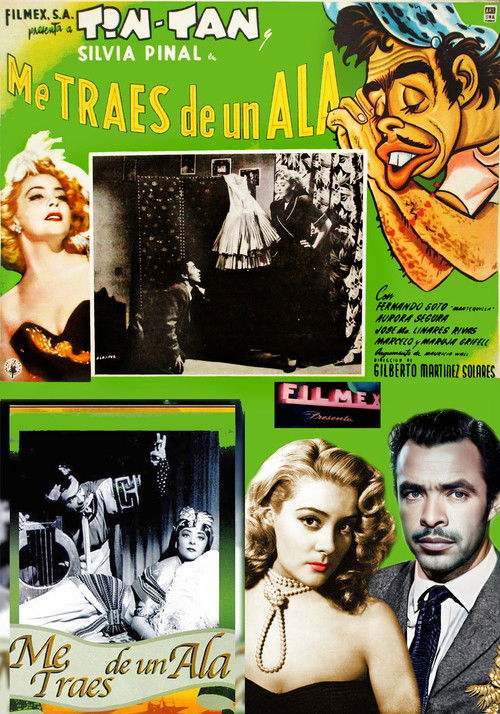
Me traes de un ala
1953
No user ratings available yet
Representation score: 2.7 out of 10
Representation Score
Limited
1952
Director
Gilberto Martínez Solares
Runtime
82 minutes
Average Rating
No ratings yetNew Showbiz Analysis
The film's strength lies in its vibrant documentation of the pachuco subculture. By using Spanglish and hybrid identities, it offers a nuanced celebration of Mexican and American cultural intersections that challenged the conservative norms of the 1950s. However, the production remains tied to the era's social limitations. Its adherence to traditional gender hierarchies and straight-centered structures prevents a more progressive score. Ultimately, the film serves as a significant cultural text for ethnic representation, even while maintaining the standard social and gendered constraints of its time.
Category Breakdown
The film follows the traditional romantic structures of 1950s commercial cinema, focusing on heterosexual relationships. There are no queer narratives or non-cisgender identities represented in the main storyline.
The narrative structures follow traditional mid-century gender roles. Female characters participate in the musical elements but primarily function within established social roles without challenging male leadership.
The film highlights the pachuco subculture, emphasizing ethnic hybridity. The use of Spanglish and specific clothing styles challenges the monolithic presentation of Mexican identity.
The pachuco persona challenges formal social norms and traditional language standards. This performance disrupts conventional behavior, introducing a sense of social fluidity.
There is no significant portrayal of physical or neurodivergent disabilities in this work.
Present on Screen
Limited or Absent
Official Synopsis
Tin-Tan wants to builds an ice cream machine.
1953
1978
1951
1957

1960
1949
1940
1934
No reviews yet. Be the first to share your thoughts on this movie!
Use the rating form above to leave a star rating and optional review.