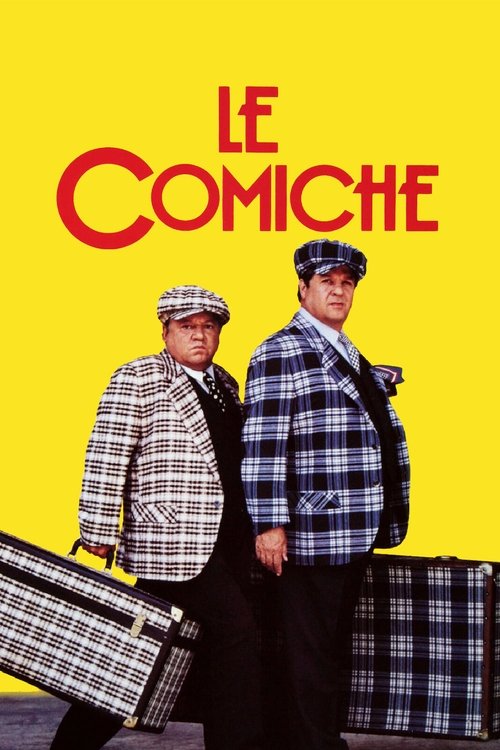
The Comics
1990
No user ratings available yet
Representation score: 1.8 out of 10
Representation Score
Limited
1958
Director
Fernando Cortés
Runtime
80 minutes
Average Rating
No ratings yetNew Showbiz Analysis
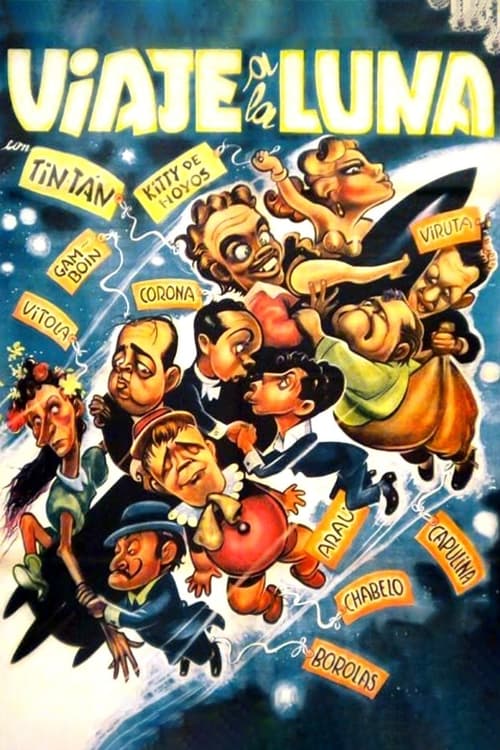
Trip to the Moon (1958) is a mid-century comedy that prioritizes situational irony and mistaken identity over social commentary. The narrative centers on two male comedians navigating an asylum, a structure that leans heavily on traditional comedic formulas of the era. The film lacks meaningful representation of diverse identities, focusing instead on a straight-focused romantic subplot and male-driven escapism. It adheres to the standard demographic and social hierarchies typical of 1950s cinema. Ultimately, the work functions as lighthearted escapism. It utilizes themes of mental health and institutionalization for comedic effect rather than to provide a deconstruction of systemic oppression or neurodivergent experiences.
Category Breakdown
The film includes a traditional romantic subplot that suggests a focus on straight relationships. There is no representation of LGBTQ+ identities or narratives that challenge standard social norms.
The plot revolves around male comedians seeking escape and playing a significant role in driving the story. Female characters are not prominently featured, and the narrative structure centers on male comedians.
The film follows the typical demographic composition of mid-century Spanish-language comedy. There is no indication of a diverse cast that includes non-Anglo-Saxon actors.
The story uses an asylum setting as a comedic backdrop. It does not critically examine systemic issues, functioning primarily as a standard comedic romp.
Mental health is used as a comedic plot device centered on mistaken identity. This framing treats neurodivergence as a situational farce rather than a lived experience with real control over events.
Present on Screen
Limited or Absent
Official Synopsis
In this movie a couple of comedians try to disappear for a while and end up in an asylum, where confused as the mad, and try to escape, but one of them falls in love and that complicates things.
1990

2021

1968

1970

1966

1969
2009

1998
No reviews yet. Be the first to share your thoughts on this movie!
Use the rating form above to leave a star rating and optional review.