A Blissful Blunder
1952
No user ratings available yet
Representation score: 1.1 out of 10
Representation Score
Limited
1966
Director
Léo Joannon
Runtime
100 minutes
Average Rating
No ratings yetNew Showbiz Analysis
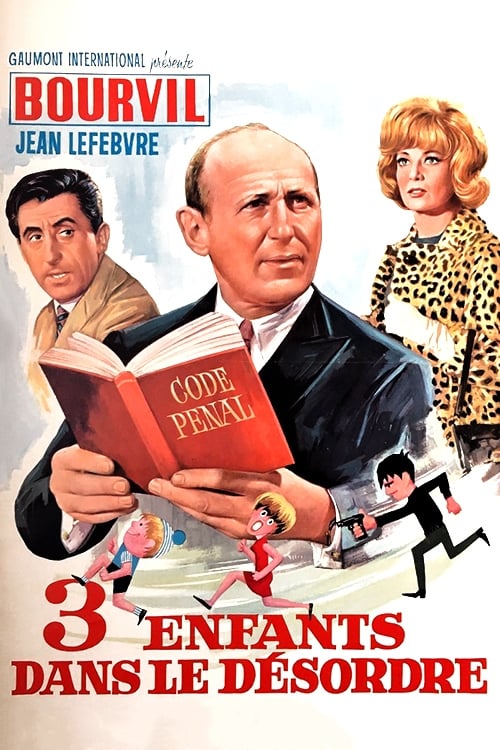
Three Disordered Children operates as a conventional mid-century comedy, relying on established clichés rather than social subversion. The plot focuses on a man's personal deception to avoid legal consequences, serving as a comedic device rather than a critique of institutional power. The film lacks the narrative structure to engage with the way different parts of someone's identity overlap. It remains firmly rooted in the demographic and social norms of 1960s France, prioritizing lighthearted chaos over the deconstruction of social hierarchies. Ultimately, the work functions within a traditional framework that avoids challenging systemic norms regarding gender, race, or sexuality.
Category Breakdown
The film does not include any LGBTQ+ characters or stories that question the assumption that everyone is straight or cisgender. It follows the traditional social structures common in 1966 French comedy.
The story centers around a male protagonist dealing with a chaotic domestic situation. The premise suggests a traditional patriarchal framework where the male lead plays a significant role in driving the story.
The film likely reflects the homogeneous social landscape of mid-1960s France. It adheres to the standard demographic norms of its era.
The story uses a classic comedy of errors cliché. It focuses on individual chaos rather than a systemic critique of Western institutions like the family or state.
There is no indication of characters with visible or invisible disabilities within the narrative.
Present on Screen
Limited or Absent
Official Synopsis
A man falsely recognize two teenagers and one child as his own children in order to avoid jail so his life becomes more and more chaotic.
1952
1983
1955
1985
1984

1958
1963
1973
No reviews yet. Be the first to share your thoughts on this movie!
Use the rating form above to leave a star rating and optional review.