
Delicacy
2011
No user ratings available yet
Representation score: 4.7 out of 10
Representation Score
Good
2000
RDirector
Agnès Jaoui
Runtime
112 minutes
Average Rating
No ratings yetNew Showbiz Analysis
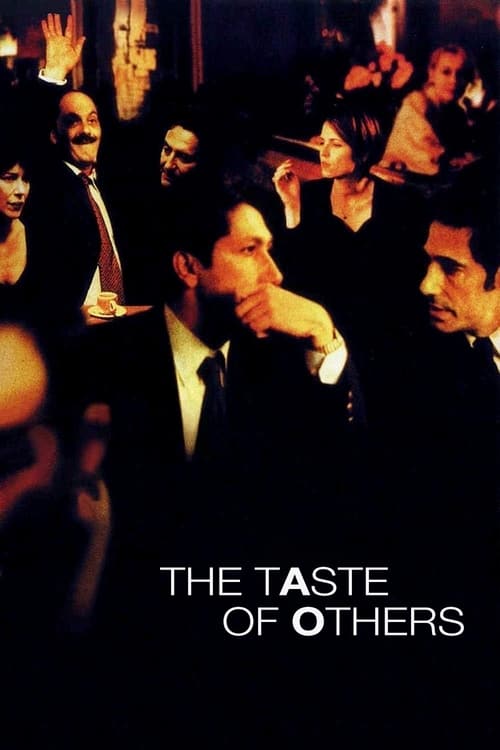
Agnès Jaoui’s drama stands out as a pointed social critique, leveraging character development to expose the pretensions of the French intellectual elite. It excels in depicting women with significant influence and intellectual depth, moving past conventional domestic narratives. However, the film’s demographic scope is limited. It lacks racial and LGBTQ+ representation, focusing primarily on the internal conflicts within a homogeneous upper-class community. This narrows the social commentary to a more exclusive audience. Ultimately, the film prioritizes intellectual depth over broad demographic representation, making it a focused study of class and social performance rather than a widely inclusive narrative.
Category Breakdown
The film centers on typical heterosexual relationships and lacks clear queer stories or non-binary gender roles among its characters.
Women in the film are portrayed with strong intellect and emotional depth, challenging traditional male dominance. The story highlights the tension between female characters.
The film portrays a society that is mostly uniform in ethnicity and culture. It emphasizes class distinctions rather than showcasing diverse racial backgrounds.
The film provides a nuanced look at Western social structures and the pretensions of the upper classes. It avoids endorsing religion, instead focusing on moral ambiguity and societal critique.
The film does not feature central characters with physical or cognitive disabilities. Instead, it explores issues related to social awkwardness and intellectual pride.
Present on Screen
Limited or Absent
Official Synopsis
Unpolished and ultra-pragmatic industrialist Jean-Jacques Castella reluctantly attends Racine's tragedy "Berenice" in order to see his niece play a bit part. He is taken with the play's strangely familiar-looking leading lady Clara Devaux. During the course of the show, Castella soon remembers that he once hired and then promptly fired the actress as an English language tutor. He immediately goes out and signs up for language lessons. Thinking that he is nothing but an ill-tempered philistine with bad taste, Clara rejects him until Castella charms her off her feet.
2011

1997
1983

2001

1984

2006

2010

1971
No reviews yet. Be the first to share your thoughts on this movie!
Use the rating form above to leave a star rating and optional review.