Di che segno sei?
1975
No user ratings available yet
Representation score: 4.2 out of 10
Representation Score
Limited
1980
Director
Sergio Martino
Runtime
110 minutes
Average Rating
No ratings yetNew Showbiz Analysis
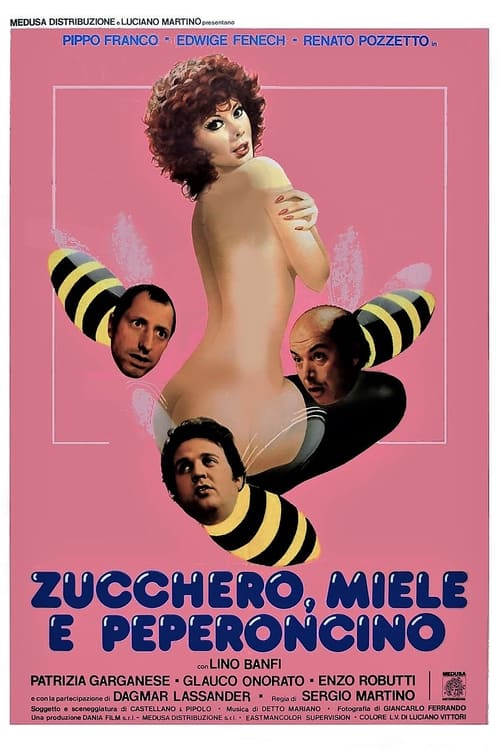
Sugar, Honey and Pepper is a traditional Italian genre comedy that adheres to the social and demographic norms of its time. It relies heavily on established comedic clichés rather than intentional social deconstruction. The film briefly disrupts conventional gender roles by having a man serve as a maid, offering a minor deviation from typical masculine dominance. Overall, the narrative structure remains centered on heterosexual attraction and the social constraints of 1980s Europe, lacking a progressive approach to representation.
Category Breakdown
The film centers on heterosexual relationships and includes comedic misunderstandings. There are no non-binary gender identities or critiques of heterosexuality.
The second episode challenges traditional gender roles by having a man serve as a maid. However, the first episode uses the 'seductress' stereotype for female characters.
The film reflects the demographic uniformity typical of 1980s Italian cinema. There is no indication of multicultural casting or ethnic diversity.
The vignettes explore situational morality and social absurdity. While examining class dynamics through a maid and her mistress, it avoids broader ideological critiques.
There is no mention of characters with visible or invisible disabilities. No assessment of their role or cliché usage is possible.
Present on Screen
Limited or Absent
Official Synopsis
Three episodes. In the first episode Valerio is mistaken for a notorious criminal. Very beautiful journalists succeed to bring him to her house for an exclusive interview. She tries to seduce him. In the second episode Giuseppe, an unlucky and ugly man, gets a job as a maid. His mistress falls in love for him. In the third episode, Plinio is a taxi driver who loves his cab above all. But at one point he is involved with the kidnapping of a woman.
1975
1973
1980
1980

1964
1982

1973
1983
No reviews yet. Be the first to share your thoughts on this movie!
Use the rating form above to leave a star rating and optional review.