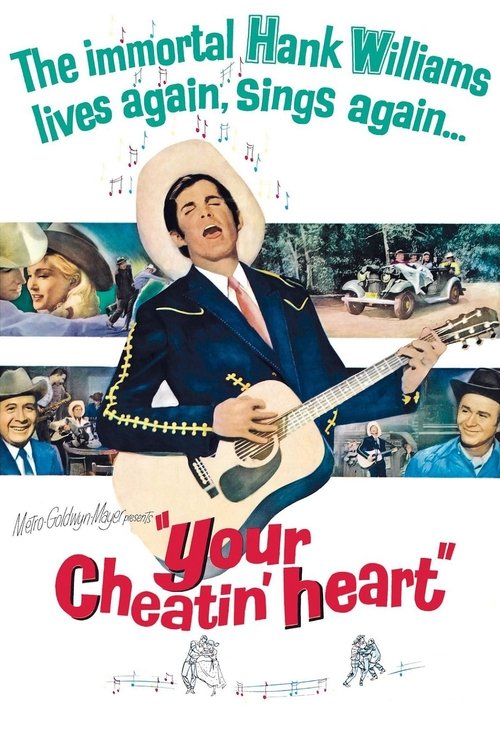
Your Cheatin' Heart
1964
No user ratings available yet
Representation score: 1.6 out of 10

Representation Score
Minimal
2012
PG-13Director
Harry Thomason
Runtime
102 minutes
Average Rating
No ratings yetNew Showbiz Analysis
The film sticks closely to the social norms of the 1950s and does not introduce diverse identities or perspectives. Its narrative structure focuses on a male-dominated industry and a specific demographic, leading to a lack of varied viewpoints. Ultimately, it tells a straightforward character-driven story within a traditional cultural framework without challenging established norms.
Category Breakdown
The film does not include any LGBTQ+ characters or narratives that question the assumption that everyone is straight or cisgender. It stays within the social norms of the 1950s without adding any hints of LGBTQ+ relationships.
The story centers around a male-dominated world of mid-century country music. It emphasizes traditional masculine roles without questioning the gender hierarchy.
Set in the Appalachian countryside, the film reflects the mostly white population of the early 1950s. There is little diversity in the cast, which is predominantly rural and white.
This biographical drama follows a typical storyline without questioning traditional Western values. It portrays family and patriotism positively without suggesting they might be oppressive.
The film examines the physical and mental decline of the main character but it is unclear if these portrayals give the character a significant role in driving the story.
Present on Screen
Limited or Absent
Official Synopsis
At the end of 1952, with the best years of his career behind him, country music legend Hank Williams hires a local kid to drive him through the Appalachian countryside for a pair of New Years shows in West Virginia and Ohio.
1964
1982
2017
1978
1973

2014

2007

2025
No reviews yet. Be the first to share your thoughts on this movie!
Use the rating form above to leave a star rating and optional review.