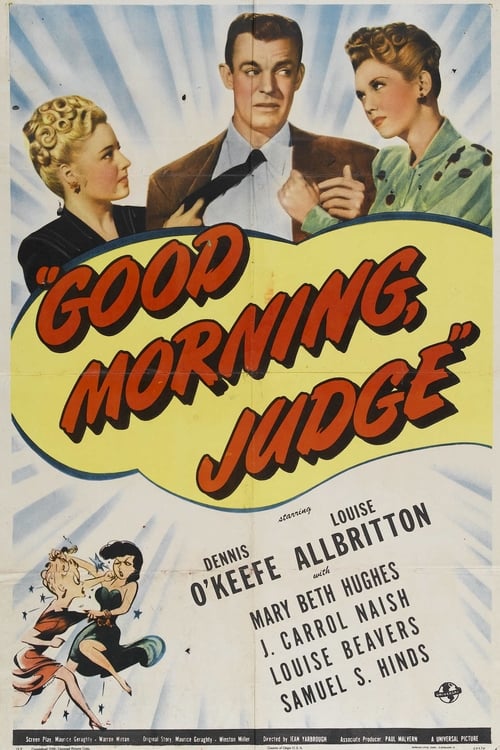
Good Morning, Judge
1943
No user ratings available yet
Diversity score: 3.1 out of 10

1953
Director
Ville Salminen
Runtime
77 minutes
Average Rating
No ratings yetSynopsis
A comedy about a poor artist who is accidentally accused of the murder of his fiancee.
Overall Score
Limited
Category Breakdown
LGBTQ+ Representation
The film lacks any evidence of non-heteronormative identities. The plot focuses on a traditional romantic entanglement between an artist and his fiancée.
Gender Representation
The narrative relies on classic gendered archetypes and traditional romantic comedy tropes. It operates within the conventional gender hierarchies typical of the 1950s.
Racial & Ethnic Diversity
The cast appears ethnically homogeneous, reflecting the localized Finnish production context. There is no indication of diverse ethnic perspectives or race-bent casting.
Religious & Cultural Diversity
The film adheres to the social stability and traditional morality of mid-century European cinema. It does not engage in critiques of Western institutions.
Disability Representation
There is no evidence of characters with physical or neurodivergent disabilities within the story.
Strengths
Areas for Improvement
AI Analysis
This 1953 comedy is a product of its time, adhering strictly to the social and narrative constraints of mid-century Finland. The story follows a conventional path, focusing on a localized romantic conflict rather than exploring broader social identities. The film lacks intentionality regarding intersectional depth or the disruption of traditional hierarchies. It functions as a standard period piece that mirrors the demographic and moral landscape of its era. Ultimately, the work provides a snapshot of traditional storytelling, prioritizing genre-standard tropes over diverse or subversive representation.
1943
1935
1946
1985
1944
1960

1971
1937
1959
1962
1945

1936
No reviews yet. Be the first to share your thoughts on this movie!
Use the rating form above to leave a star rating and optional review.