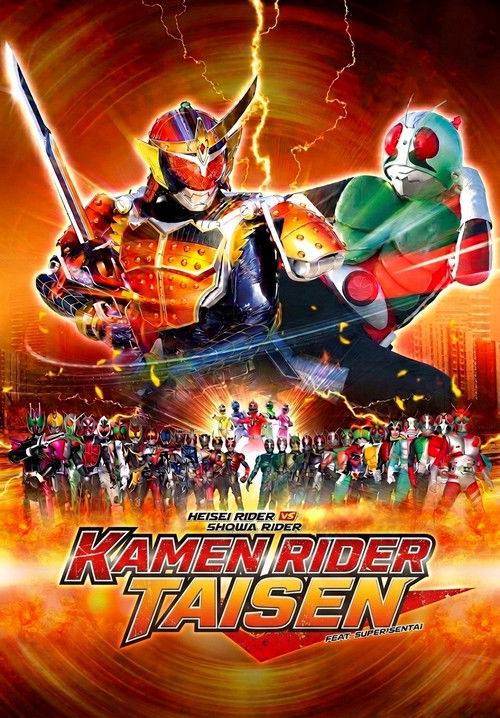
Heisei Rider vs. Showa Rider: Kamen Rider Wars feat. Super Sentai
2014
No user ratings available yet
Representation score: 4.2 out of 10
Representation Score
Limited
2015
Director
Takayuki Shibasaki
Runtime
95 minutes
Average Rating
No ratings yetNew Showbiz Analysis
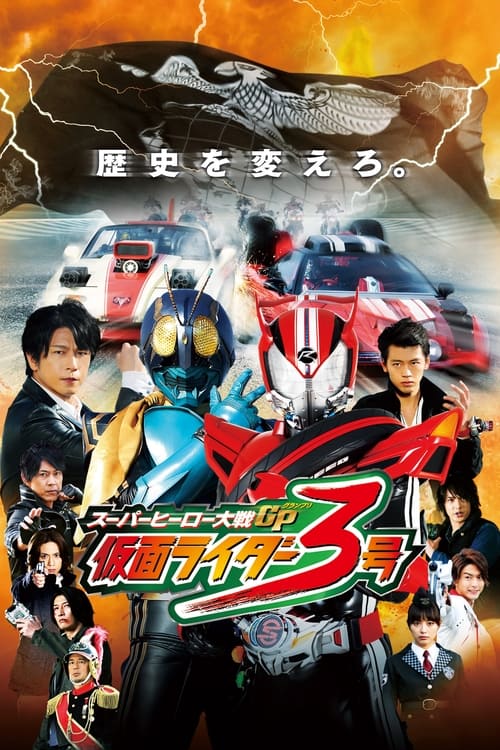
Super Hero Wars GP: Kamen Rider #3 is a standard action film that prioritizes historical revisionism over social diversity. The plot centers on restoring a corrupted timeline, offering a sophisticated look at institutional manipulation of truth. While the film lacks diverse character identities or characters who reflect more than one aspect of diversity, it excels in its thematic exploration of systemic corruption. The narrative functions well as a critique of how power structures rewrite reality, rather than as a study of social hierarchies. Ultimately, the film operates within established heroic archetypes, providing a culturally specific experience that does not significantly challenge racial or gender norms.
Category Breakdown
The film does not include any LGBTQ+ characters or explore non-cisgender identities.
Kiriko Shijima partners with Shinnosuke Tomari, playing a crucial role in his journey, but the relationship adheres to traditional gender roles.
The story focuses on a homogeneous Japanese identity, emphasizing a localized cultural struggle.
The narrative examines how power structures corrupt history and rewrite collective memory to serve oppressive ends.
The film does not provide any specific details about the portrayal of physical or neurodivergent disabilities.
Present on Screen
Limited or Absent
Official Synopsis
The evil organization Shocker alters history by sending their newest creation, Kamen Rider 3, to defeat Kamen Riders 1 and 2 back in 1973. In the alternate present, Shocker is more powerful than ever, and most of the Kamen Riders are now either imprisoned or brainwashed to work for them. One such brainwashed Rider is Shinnosuke Tomari who thanks to his partner Kiriko Shijima, remembers the truth and joins forces with the remaining Kamen Riders who are still at large to make a stand against Shocker and put history back on its proper course.
2014
1991
2013
1990
2010

2013
2019

2012
No reviews yet. Be the first to share your thoughts on this movie!
Use the rating form above to leave a star rating and optional review.