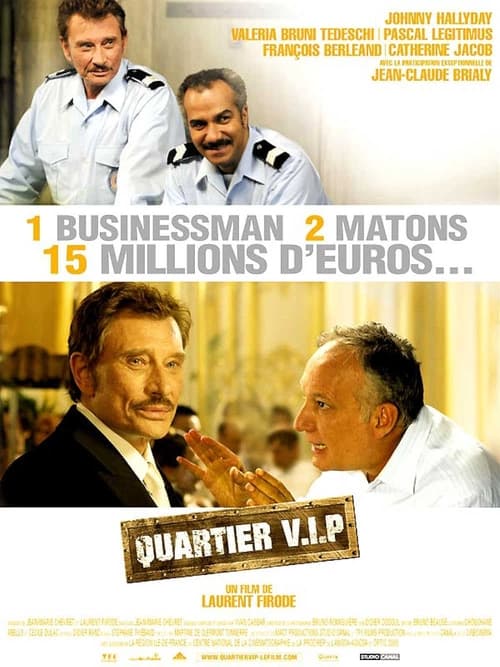
Quartier V.I.P.
2005
No user ratings available yet
Representation score: 4.2 out of 10

Representation Score
Limited
2007
Director
Alexandra Leclère
Runtime
95 minutes
Average Rating
No ratings yetNew Showbiz Analysis
The film serves as a social satire that dismantles traditional domestic hierarchies and the intersection of wealth and intimacy. It successfully subverts gendered expectations by highlighting male emotional vulnerability and critiquing consumerist lifestyles. However, the film's impact is limited by a lack of explicit identity markers. The ambiguity around the relationship between the protagonist and his chauffeur prevents a clearer score for queer representation. Additionally, the absence of racial or disability-related details leaves significant gaps in the diversity profile. Ultimately, the work focuses on interpersonal ethics and class dynamics rather than a broad exploration of multi-layered identities.
Category Breakdown
The film explores an emotional bond between a businessman and his chauffeur, challenging traditional social structures. However, the relationship remains ambiguous, lacking explicit confirmation of queer identity.
The story presents a male protagonist who is emotionally vulnerable and isolated, subverting typical gender clichés. It critiques superficial feminine archetypes through a wife focused solely on consumerism and aesthetics.
There is no information available regarding the racial or ethnic identities of the characters. Consequently, no assessment of racial diversity can be made.
The film critiques capitalist-driven domesticity and the transactional nature of marriage, prioritizing emotional authenticity over traditional family structures.
The provided context contains no information regarding physical disabilities, neurodivergence, or mental health conditions.
Present on Screen
Limited or Absent
Official Synopsis
Jean-Pierre, a wealthy businessman, is lonely. He still desires his wife but she only seems interested in shopping and the beauty salon. Tired of lunching alone every day, one day he decides to invite his chauffeur to join him, and a relationship quickly develops as the two find they have much in common. Are they just cash machines for their wives? Don't they deserve some love in return? Jean-Pierre confiscates his wife's credit card, but things don't turn out exactly the way he'd hoped...
2005

1989

2002

1995

2005

2004

1969

2009
No reviews yet. Be the first to share your thoughts on this movie!
Use the rating form above to leave a star rating and optional review.