Ellos trajeron la violencia
1990
No user ratings available yet
Representation score: 4.4 out of 10
Representation Score
Limited
2026
Director
STILLZ
Runtime
84 minutes
Average Rating
No ratings yetNew Showbiz Analysis
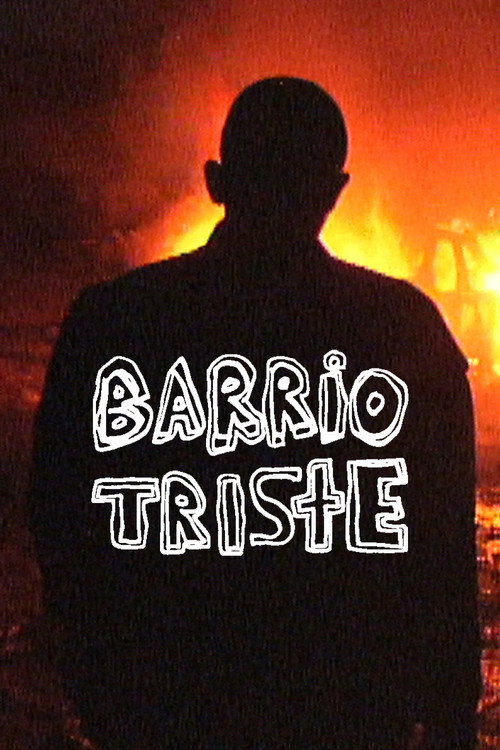
The film opens with a stolen camera, a prop that transforms a group of disaffected Medellín teens from invisible to observed. This found-footage approach sells a raw, unpolished authenticity, framing the 1980s Colombian street as a space where traditional hierarchies have collapsed into pure chaos. The camera does not judge; it merely records the boys’ petty thefts, their shared weed, and their violent impulses. The sold meaning is one of bleak realism: these are not heroes, but hollow vessels of boredom and rage, left to define themselves in the absence of parental or state authority. The narrative’s argument is tested by the police interview segment, where a serial killer calmly explains his murders as a pursuit of "power." This moment shifts the tone from youthful delinquency to existential horror, suggesting that the violence the teens document is merely the surface of a deeper societal rot. The film does not offer redemption or moral clarity; instead, it lets the violence stand as a symptom of neglect. The ending, implied by the found-footage format, leaves the viewer with the raw, unedited reality of these lives, refusing to tidy up the mess. In its moment, *Barrio Triste* stands as a counter-narrative to polished crime dramas, using the aesthetic of amateur video to strip away the glamour of violence. It does not celebrate the teens, nor does it condemn them; it simply shows them. The last image is not a resolution but a continuation, a reminder that the camera keeps rolling even after the story ends. This refusal to provide closure is the film’s strongest statement: in the barrio, there is no exit, only the endless, recorded present.
Category Breakdown
No queer intimacy or identity discussions appear. The group dynamic remains strictly heteronormative or undefined throughout the narrative.
The cast is exclusively male. Men are depicted as the sole agents of violence, boredom, and moral confusion in the main narrative.
Set in 1980s Medellín, the film centers Colombian teenagers. Local poverty and street life are treated as the authentic, unmarked default rather than an exotic backdrop.
The film frames 1980s Medellín’s social decay and institutional neglect as the primary lens. Traditional authority figures are absent, leaving teens to define their own chaotic morality.
No characters display physical, sensory, or cognitive impairments. The camera lens functions as a plot device, not a representation of human difference.
Present on Screen
Limited or Absent
Official Synopsis
In the 1980s Medellín, Colombia, a group of disaffected teens documents their lives after stealing a TV reporter's camera.
1990
1980
2008

2017

2003

2014

2006

2004
No reviews yet. Be the first to share your thoughts on this movie!
Use the rating form above to leave a star rating and optional review.