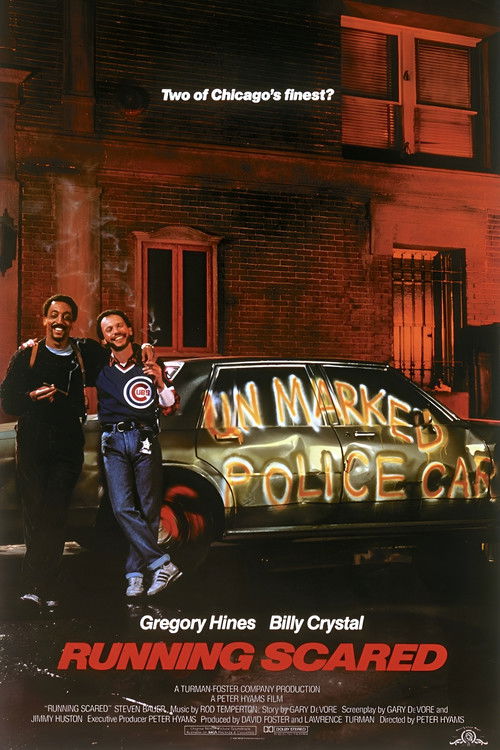
Running Scared
1986
No user ratings available yet
Representation score: 2.1 out of 10
Representation Score
Minimal
1984
PGDirector
Richard Benjamin
Runtime
97 minutes
Average Rating
No ratings yetNew Showbiz Analysis
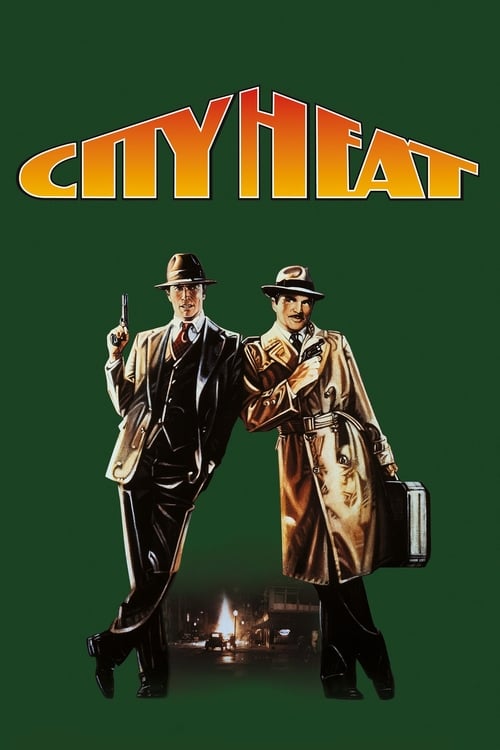
City Heat is a conventional crime-comedy that emphasizes traditional male clichés and a homogeneous cultural perspective. The film adheres to the demographic uniformity typical of 1980s studio filmmaking, offering little engagement with diverse identities. The narrative structure focuses on the professional rivalry between two men, leaving little room for diverse social perspectives. Operating within a binary moral landscape of law enforcement versus organized crime, the film avoids any meaningful challenge to systemic norms. Ultimately, the film reinforces traditional social hierarchies through its crime-comedy lens, rather than challenging them.
Category Breakdown
The film does not feature any LGBTQ+ characters or non-cisgender identities.
The story centers around male protagonists and their professional rivalries. Female characters have limited roles and rarely challenge the established masculine power dynamics.
The cast is predominantly white, with no characters of color in positions of significant influence or ability to act.
The story uses crime-comedy clichés to reinforce traditional views of authority and justice. It does not explore systemic oppression or critique Western institutions.
The film does not portray any visible or invisible disabilities. Character arcs are not influenced by neurodivergence or physical impairments.
Present on Screen
Limited or Absent
Official Synopsis
Set in Kansas City in 1933, Eastwood plays a police lieutenant known simply by his last name, Speer. Reynolds plays a former cop turned private eye named Mike Murphy. Both Speer and Murphy served on the force together and were once good friends, but are now bitter enemies. When Murphy's partner is slain they team up again to fight the mob.
1986

1974
1994

1984
1982

1972

1989
1973
No reviews yet. Be the first to share your thoughts on this movie!
Use the rating form above to leave a star rating and optional review.