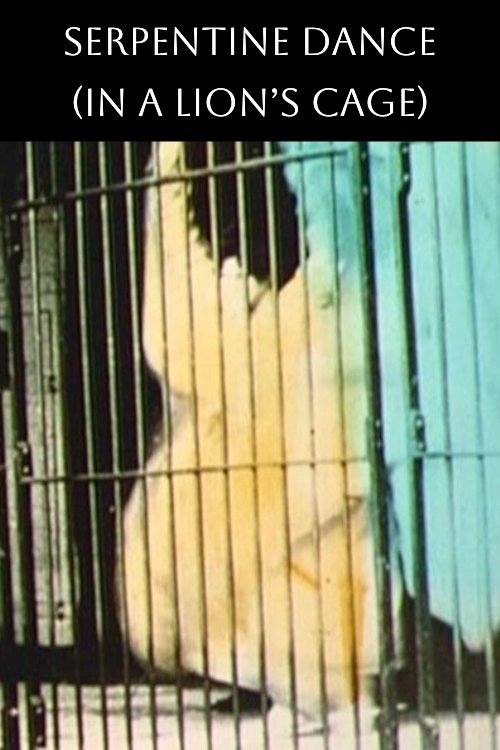
Danse Serpentine (In a Lion's Cage)
1900
No user ratings available yet
Representation score: 4.8 out of 10

Representation Score
Limited
1903
Director
A.C. Abadie
Runtime
1 minutes
Average Rating
No ratings yetNew Showbiz Analysis
This 1903 documentary serves primarily as an ethnographic artifact of early cinema. It offers a rare historical glimpse into Egyptian street life, providing visibility to a non-Western subject during a period dominated by Western perspectives. However, the film lacks the narrative depth to engage with modern multi-layered themes. The representation is limited by the observational nature of the era, focusing on a singular male figure and a performing animal. While it provides ethnic visibility, the work remains a neutral snapshot of colonial-era observation rather than a piece of intentional, progressive storytelling.
Category Breakdown
The film does not depict any LGBTQ+ identities. It focuses solely on a street performance without showing any non-straight relationships or dynamics.
The film centers on a single male performer and an animal. There is no presence of women's ability to drive the story or subversion of gender hierarchies.
The film provides visibility to a non-Western subject in Cairo. It offers a baseline of ethnic visibility that exceeds many homogeneous Western films of the era.
The work captures a specific Egyptian street performance. It functions as a neutral ethnographic snapshot rather than a critique of social or political institutions.
There is no evidence of characters with visible or invisible disabilities within the provided context.
Present on Screen
Limited or Absent
Official Synopsis
The fakir with his trick monkey is seated on the pavement in a street in Cairo. He plays a tom-tom, while the monkey dances the couchee-couchee. The movements of the monkey are very comical. (Taken on the winter cruise of the S. S. "Auguste Victoria" of the Hamburg-American Line, leaving New York on 03 Feb 1903.)
1900

1895
1896
1899
1905

1899

1899

1902
No reviews yet. Be the first to share your thoughts on this movie!
Use the rating form above to leave a star rating and optional review.