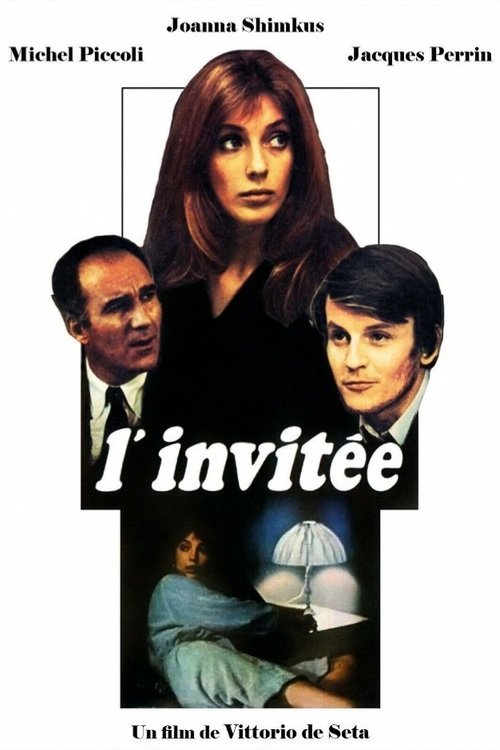
The Uninvited
1969
No user ratings available yet
Representation score: 4.5 out of 10

Representation Score
Limited
1964
Director
François Villiers
Runtime
89 minutes
Average Rating
No ratings yetNew Showbiz Analysis
The film opens on the claustrophobic interiority of Agnès, a modern French decorator stranded on a Spanish island, establishing a psychological drama where the female gaze is the primary lens. Villiers positions Agnès not as a prize to be won, but as the active agent whose professional competence and emotional clarity contrast sharply with the reactive, flawed masculinity of Zaylor and Daniel. The sold meaning is a critique of traditional romantic dynamics: men are either chaotic and unreliable or rigid and sterile, while the woman’s value lies in her self-possession. The film’s argument is tested against its own logic by refusing to resolve the tension through a conventional union; instead, the last image settles on Agnès alone, rewarding her decision to sever ties with the male leads. This ending functions as the moral verdict, asserting that truth and independence are worth more than the comfort of a relationship. In the context of 1964 French cinema, the film aligns with New Wave tendencies to prioritize personal psychology over plot mechanics, using the love triangle as a vehicle to explore female desire and choice. The camera loves Agnès’s face, granting her the final word and the visual weight of the narrative, while the men are left behind as hollow archetypes of emotional limitation.
Category Breakdown
The narrative relies exclusively on heterosexual dynamics between Agnès and the male leads. No same-sex intimacy, queer characters, or non-binary identities appear on screen.
Agnès functions as the intellectual and moral center, driving the plot through her professional competence and emotional clarity. The male characters serve as reactive foils: Zaylor is chaotic and unreliable, while Daniel is emotionally stunted. The film rewards Agnès’s autonomy, ending on her solitary resolution rather than a romantic union.
The cast is entirely white, reflecting the homogeneous European context of 1964. "Otherness" is constructed through nationality—French, Spanish, Italian, American—rather than race. No non-white characters hold power or depth; the dynamic remains within a Western, middle-class sphere.
Traditional domesticity is framed as a trap for Agnès, whose independence is validated over conventional relationship structures. The film critiques male emotional sterility and chaotic passion, positioning female self-possession as the superior moral state. Family and nation are background elements, not sources of authority.
Absent. No characters display physical, sensory, or cognitive impairments. The bodies on screen are presented as idealized and healthy, serving as sites of desire and emotional expression rather than impairment.
Present on Screen
Limited or Absent
Official Synopsis
The troubling attraction of a young decorator, Agnès, on a small Spanish island, for a man everyone distrusts, whose wife has mysteriously disappeared.
1969
1960
1963
1969
1966
1950
1970

1968
No reviews yet. Be the first to share your thoughts on this movie!
Use the rating form above to leave a star rating and optional review.