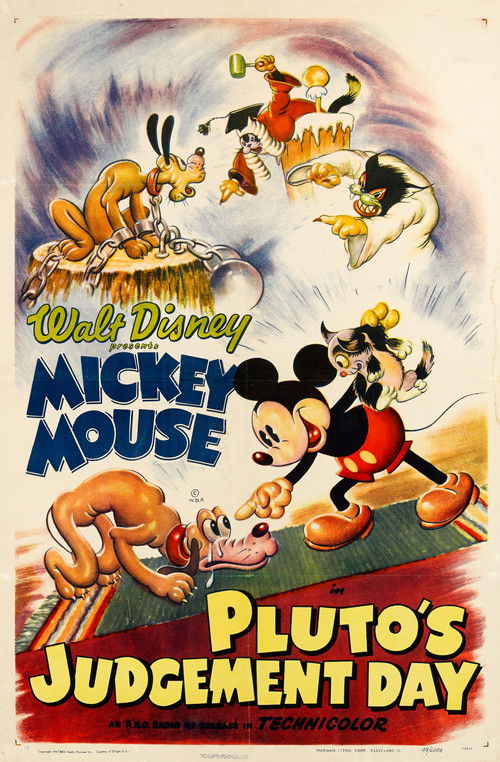
Pluto's Judgement Day
1935
No user ratings available yet
Representation score: 0.8 out of 10

Representation Score
Minimal
1936
ApprovedDirector
Rudolf Ising
Runtime
9 minutes
Average Rating
No ratings yetNew Showbiz Analysis
Little Cheeser operates as a straightforward moral fable where a young mouse battles his own impulses. The narrative relies on a clear angel-and-devil framework to guide the protagonist toward obedience. Mama Mouse establishes the family dynamic early on, sending her son to bed with a gentle reminder of his youth. This sets the stage for Cheeser’s rebellion, where he seeks adult pleasures like cheese, smoking, and alcohol. The angel side of his personality works to restrain these urges, while the devil encourages them. The conflict resolves when Cheeser’s drunkenness leads him into a dangerous encounter with a cat. This sobering experience prompts the angel to trap the devil in a copy of Dante’s Inferno. The resolution reinforces the value of parental guidance and traditional family structure. The mouse returns to bed content, accepting his role as Mama’s little man. The film reflects the cultural norms of its era without introducing harmful stereotypes. It presents a simple, accessible story that prioritizes moral clarity over complex character development. The lack of human diversity is inherent to the animal-based premise, which limits the scope for broader representation.
Category Breakdown
No LGBTQ+ characters or relationships appear in this 1936 animated short. The story focuses entirely on a young mouse’s internal struggle between good and bad impulses.
The cast consists of anthropomorphic animals with no human gender roles depicted. Mama Mouse appears briefly to send her son to bed, but she has no further role in the plot.
All characters are cartoon animals, so no human racial or ethnic identities are present. The story relies on animal archetypes rather than specific cultural or demographic representation.
The short uses a classic angel-and-devil motif to frame moral choices. Mama’s authority is respected, and the mouse returns to bed as her "little man," reinforcing traditional family structure.
No characters with physical or mental disabilities appear in the film. The story centers on a mouse’s temptation and subsequent punishment, with no focus on disability.
Present on Screen
Limited or Absent
Official Synopsis
Little Cheeser is a young mouse who thinks he's grown up. When Mama sends him to bed, calling him "Mama's little man," his devil side leads him to the pantry for cheese, then to smoking supplies, a racy magazine, and booze, while his angel side tries to stop him. Drunk, Cheeser goes looking for the cat, but the encounter quickly sobers him. Meanwhile, the angel traps the devil in a copy of Dante's Inferno and helps Cheeser escape. Grateful to be safe, Cheeser happily goes to bed as Mama's little man.
1935
1938
1934
1954
1933

1938
1939
1953
No reviews yet. Be the first to share your thoughts on this movie!
Use the rating form above to leave a star rating and optional review.