Donald's Nephews
1938
No user ratings available yet
Diversity score: 1.9 out of 10
1938
NRDirector
Jack King
Runtime
8 minutes
Average Rating
No ratings yetSynopsis
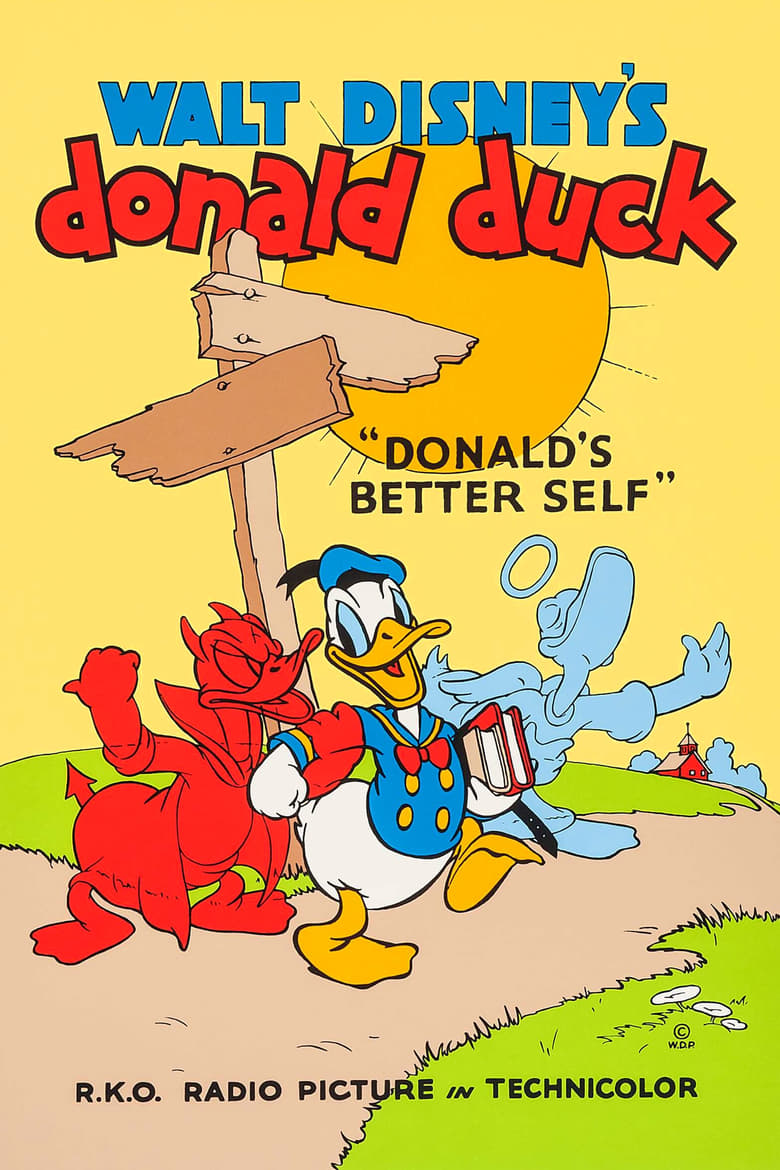
Schoolboy Donald is torn between his angel and devil sides, though in Donald's case, the devil side isn't hard to resist. But the smoking he's encouraged to do turns him green and gives him regrets, and when the good side shows up and kicks evil's butt, Donald cheers.
Overall Score
Limited
Category Breakdown
LGBTQ+ Representation
The film lacks LGBTQ+ characters or non-cisnormative identities. It relies on standard character archetypes centered on a binary struggle between personified angel and devil figures.
Gender Representation
The narrative focuses entirely on a singular male protagonist. It does not engage with gender dynamics or attempt to subvert traditional social hierarchies.
Racial & Ethnic Diversity
The story centers on a single anthropomorphic figure. There is no indication of a diverse cast or the inclusion of various racial and ethnic identities.
Religious & Cultural Diversity
The film uses a didactic moral framework through the angel and devil trope. This reinforces a conventional morality that upholds traditional social expectations.
Disability Representation
There is no evidence of characters with physical or neurodivergent disabilities within the narrative.
Strengths
Areas for Improvement
AI Analysis
Donald's Better Self is a quintessential 1930s animated morality play. The film functions as a cautionary tale about social conduct, specifically regarding smoking, through a rigid dichotomy of good versus evil. The narrative architecture is built on traditionalist tropes that reinforce the status quo rather than challenging it. It lacks the intersectional complexity or social disruption found in more progressive works. Ultimately, the film reflects the homogeneous casting and moralistic standards of its era, focusing on individual character morality within a very narrow, conventional framework.
1938
1938
1942
1939
1946
1941
1940
1939
1938
1941
1947
1939
No reviews yet. Be the first to share your thoughts on this movie!
Use the rating form above to leave a star rating and optional review.