
Shoot the Piano Player
1960
No user ratings available yet
Representation score: 3.7 out of 10
Representation Score
Fair
1977
Not RatedDirector
Wim Wenders
Runtime
125 minutes
Average Rating
No ratings yetNew Showbiz Analysis
Wim Wenders' film explores postmodern alienation, emphasizing existential dread over a broad range of demographics. Despite its limited diversity in race, gender, and sexual orientation, it offers a deep cultural critique. The narrative effectively dismantles conventional Western morality and social stability. It portrays a world of emotional uncertainty where authority and religion are absent. However, the film's focus on a homogenous social environment and its use of illness as a plot device limit its broader impact. It remains a highly specialized, Western-focused psychological drama.
Category Breakdown
The film does not include explicit LGBTQ+ characters or stories that go beyond traditional heterosexual relationships. Relationships in the film tend to be emotionally distant and focused on traditional structures.
The story focuses on the mental breakdown of a male character. Female characters play minor roles and are not central to the main conflict.
The cast and setting are primarily white and Western European. The narrative does not explore diverse racial or ethnic backgrounds.
The film provides a sophisticated look at modern Western institutions and capitalist systems. It examines moral ambiguity and the lack of spiritual fulfillment in professional lives.
Jonathan Zimmerman's terminal illness drives the plot. However, the illness is used more as a plot device than a detailed exploration of living with a serious health condition.
Present on Screen
Limited or Absent
Official Synopsis
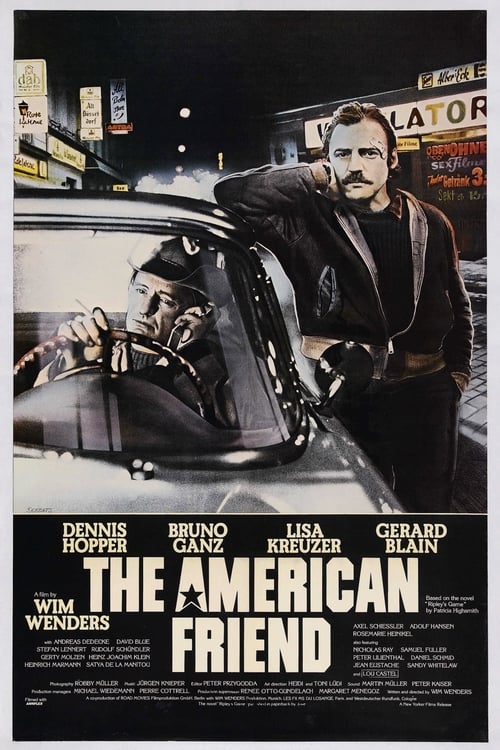
Tom Ripley, an American who deals in forged art, is slighted at an auction in Hamburg by picture framer Jonathan Zimmerman. When Ripley is asked by gangster Raoul Minot to kill a rival, he suggests Zimmerman, and the two, exploiting Zimmerman's terminal illness, coerce him into being a hitman.
1960
1960

2002

2002
1962
1984

1983

1989
No reviews yet. Be the first to share your thoughts on this movie!
Use the rating form above to leave a star rating and optional review.