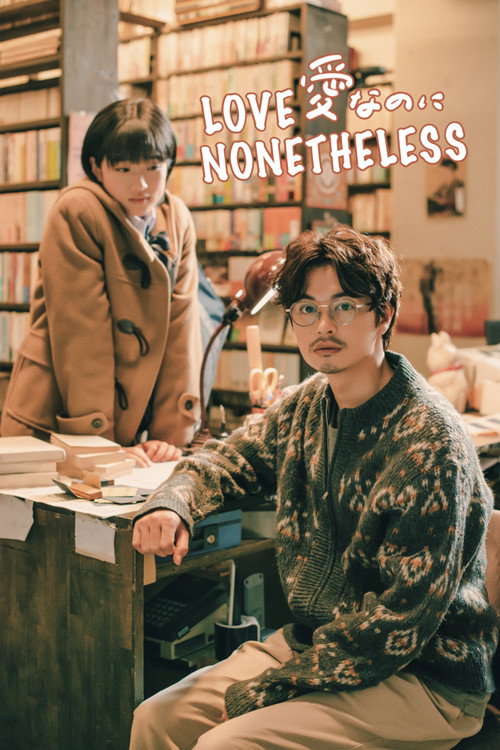
Love Nonetheless
2022
No user ratings available yet
Representation score: 3.6 out of 10

Representation Score
Limited
2005
Director
Shiori Kazama
Runtime
112 minutes
Average Rating
No ratings yetNew Showbiz Analysis
World's End / Girl Friend focuses on interpersonal dysfunction and unrequited affection, avoiding idealized romantic clichés. It centers on infidelity and ineffective communication, moving away from heroic archetypes to explore modern psychological complexity. While the film disrupts conventional romantic expectations, it remains anchored in traditional interpersonal dynamics. It lacks significant exploration of diverse identities or broader social issues, focusing instead on individual relationships.
Category Breakdown
The film suggests emotional complexity through Misawa's feelings of love for Shinnosuke. However, it does not explicitly confirm non-straight relationships or orientations.
Shinnosuke challenges the typical male lead stereotype through his infidelity and emotional shortcomings. Female characters mainly respond to his instability.
The film maintains a homogeneous social setting within a culturally specific Japanese context. There is no indication of diverse casting or ethnic representation.
The story emphasizes individual psychological truth and emotional relativism over traditional social structures. Haruko's displacement highlights the fragility of modern interpersonal connections.
There is no evidence regarding the portrayal of physical or neurodivergent disabilities in the narrative.
Present on Screen
Limited or Absent
Official Synopsis
Shinnosuke and Misawa are joint managers of a Bonsai shop. Suddenly Shinnosuke's childhood friend Haruko turns up. She has split up with her boyfriend and finds herself out on the streets. Shinnosuke starts to like her and really wants to cheer her up, but he can't manage to express his real feelings or stop picking up other women. Misawa is dumbfounded by Shinnosuke's behavior but also has complex feelings of love for his friend.
2022

2009

2020
2010

2007

2014
2015
2005
No reviews yet. Be the first to share your thoughts on this movie!
Use the rating form above to leave a star rating and optional review.