
Hotel Very Welcome
2007
No user ratings available yet
Representation score: 5.5 out of 10
Representation Score
Limited
1995
Director
Kei Kumai
Runtime
130 minutes
Average Rating
No ratings yetNew Showbiz Analysis
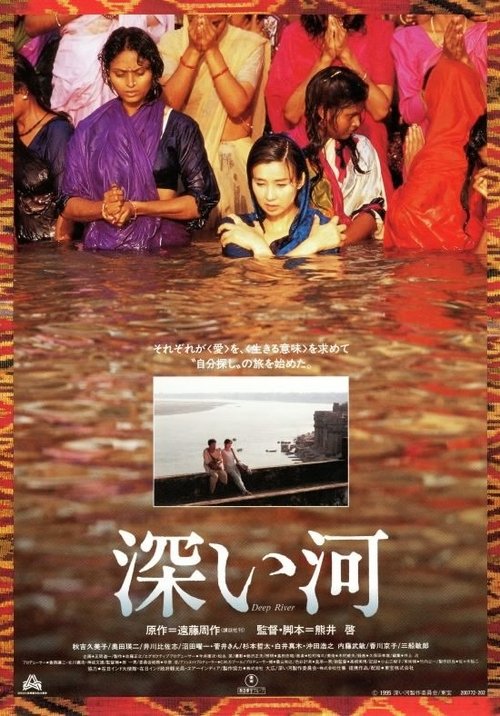
Deep River primarily serves as a cross-cultural exploration of identity. By relocating the setting from Japan to India, the film avoids a mono-cultural perspective and uses a foreign environment to facilitate character growth. While the film successfully disrupts a homogeneous cultural perspective through its international setting, it does not explicitly engage with the overlapping aspects of identity politics. The narrative emphasizes atmospheric and existential themes over deconstructing traditional social hierarchies. Ultimately, the film's diversity is driven by its geographic shift rather than a focused exploration of underrepresented identities or the subversion of traditional social structures.
Category Breakdown
The film does not include any characters or narratives related to LGBTQ+ identities or non-assuming gender matches what was assigned at birth identities. There are no visible representations of queer themes in the story.
The narrative presents a neutral framework for character development through its ensemble cast. However, it does not explicitly address or challenge traditional gender hierarchies or power dynamics.
The story achieves cross-cultural engagement by placing a Japanese cast within an Indian setting. This setup disrupts a purely domestic perspective through interactions with local populations.
By setting the film in India, the movie introduces non-Western spirituality and diverse religious landscapes. It avoids a Western-centric lens by focusing on the Global South.
There is no evidence of characters with visible or invisible disabilities in the narrative. Disability is not used as a central theme or device.
Present on Screen
Limited or Absent
Official Synopsis
A group of Japanese tourists try to forget their pasts and find themselves in India.
2007

1954

2008

1999

2016

1991
1973

2005
No reviews yet. Be the first to share your thoughts on this movie!
Use the rating form above to leave a star rating and optional review.