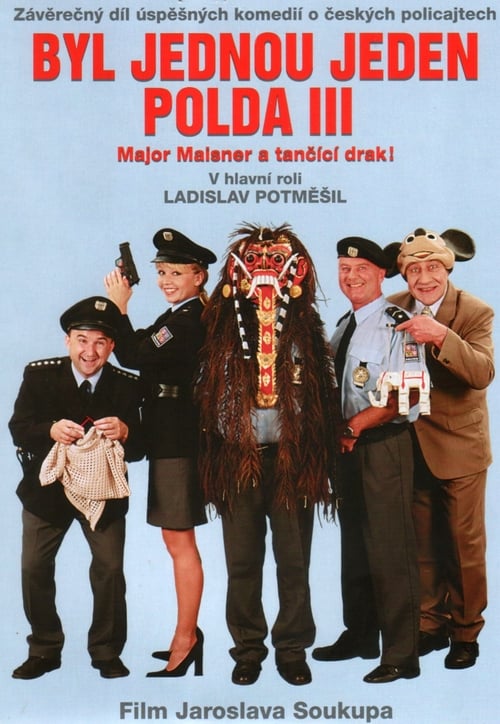
Byl jednou jeden polda III – major Maisner a tančící drak!
1999
No user ratings available yet
Representation score: 3.1 out of 10
Representation Score
Limited
1997
Director
Jaroslav Soukup
Runtime
80 minutes
Average Rating
No ratings yetNew Showbiz Analysis
This comedy operates within a traditional social framework, prioritizing established comedic clichés over progressive narrative structures. The plot centers on professional hierarchies and conventional romantic pursuits, offering little disruption to systemic norms. While women occupy specialized professional roles, the power dynamics remain heavily centered on male protagonists. The film reflects the localized production constraints and social expectations of its era, favoring character-driven interactions within a stable, conventional environment.
Category Breakdown
The film adheres to traditional patterns, focusing on heterosexual relationships without exploring any queer themes or non-binary identities.
Women have professional roles in psychology and fingerprint analysis, but their influence in the story is mainly tied to their reactions to male authority figures.
The film is set in Prague with a mostly homogeneous cast. A Romani character is mentioned, but lacks substantial ethnic representation.
The story upholds established social hierarchies within a police academy setting, emphasizing institutional continuity over cultural critique.
No visible or invisible disabilities are portrayed. There are no characters identified by neurodivergent traits or physical conditions.
Present on Screen
Limited or Absent
Official Synopsis
It all begins at Prague Airport, where American agents have brought Major Maisner, who has been expelled from the United States, in handcuffs. He returns to his place of work, the Central Police Academy, despite having been demoted to lieutenant for his "performance" and his position as academy commander having been taken over by the newly promoted Captain Hrubec. Maisner meets his former students, who now teach at the school. They all welcome him enthusiastically and receive gifts from him. While psychologist Kudláková, who is attracted to commanding types, has lost interest in the demoted Maisner and is now passionately in love with Hrubec, Boženka Vinklářová, who has broken up with the gypsy Štefan and now teaches dactyloscopy at the school, focuses her attention on him. Maisner recounts how he jumped off a skyscraper in America to defend himself against Simona Ptáčková's advances.
1999
1965
1995

2013
1983
1988

1988
1970
No reviews yet. Be the first to share your thoughts on this movie!
Use the rating form above to leave a star rating and optional review.