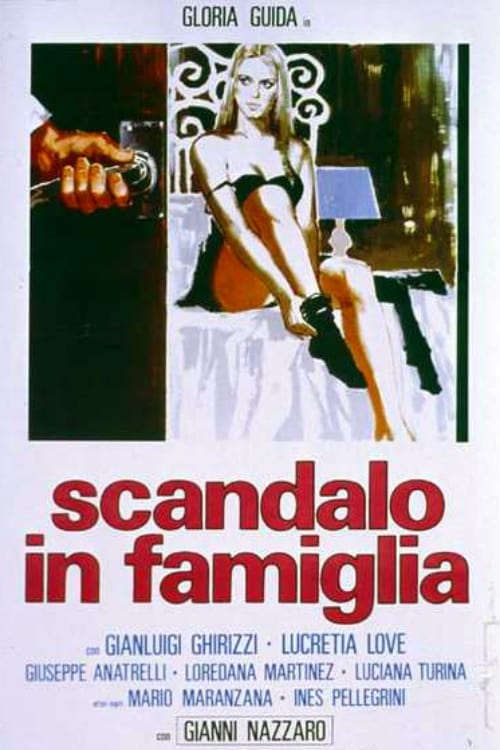
Scandal In the Family
1976
No user ratings available yet
Representation score: 4.8 out of 10

Representation Score
Fair
1986
Director
Mario Bianchi
Runtime
90 minutes
Average Rating
No ratings yetNew Showbiz Analysis
Una storia ambigua serves as a social satire that emphasizes the subversion of traditional gender hierarchies. The film's strength lies in its portrayal of women's ability to drive the story, where the protagonist actively navigates and challenges the restrictive social and political hierarchies of her time. However, the work remains limited by its narrow demographic focus. The narrative centers on a homogeneous social class, lacking racial diversity and explicit LGBTQ+ visibility. While it challenges traditional institutions, it does so primarily through a straight-centered lens. Ultimately, the film offers a critique of masculine authority while remaining socially homogenous.
Category Breakdown
The story centers on traditional marriage issues and lacks explicit depictions of LGBTQ+ identities or same-sex relationships. While it challenges stable family structures, it does not include characters who identify outside the heterosexual norm.
The film highlights the female protagonist's significant role in driving the plot. Countess Anna Guerrieri's actions and decisions are central to the story, contrasting with the male authority figure's limitations.
The narrative focuses on a homogeneous social class within its historical setting. There is no indication of racial diversity among the main characters.
The film portrays a high-ranking political figure as a source of frustration, emphasizing individual satisfaction over strict political duties.
There is no evidence of characters with visible or invisible disabilities within the provided context.
Present on Screen
Limited or Absent
Official Synopsis
Countess Anna Guerrieri, a rich and provocative noblewoman, marries Romano, an important fascist who is very loyal to the party. Sadly his sexual performance is found very lacking by the Countess, and so frustrated, she decides to look elsewhere for satisfaction and ends up setting her sights on Stefano, a naive and inexperienced young nephew undergraduate who has recently arrived from the provinces.
1976
1973

1974

1952
1990

1976
1963
1984
No reviews yet. Be the first to share your thoughts on this movie!
Use the rating form above to leave a star rating and optional review.