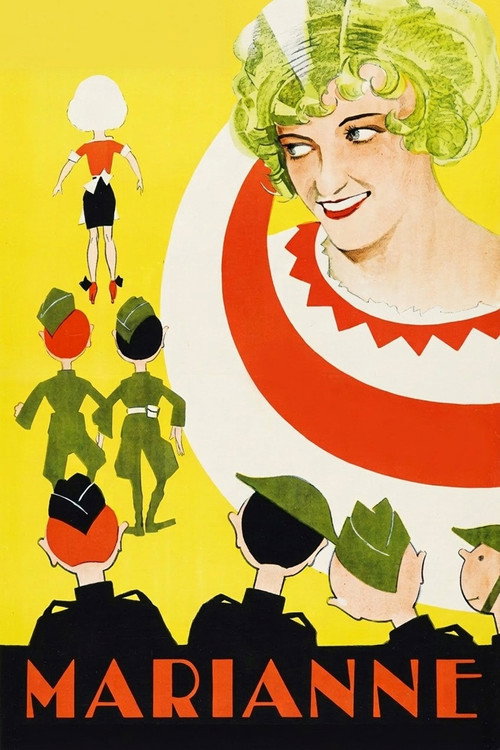
Marianne
1929
No user ratings available yet
Representation score: 0.9 out of 10
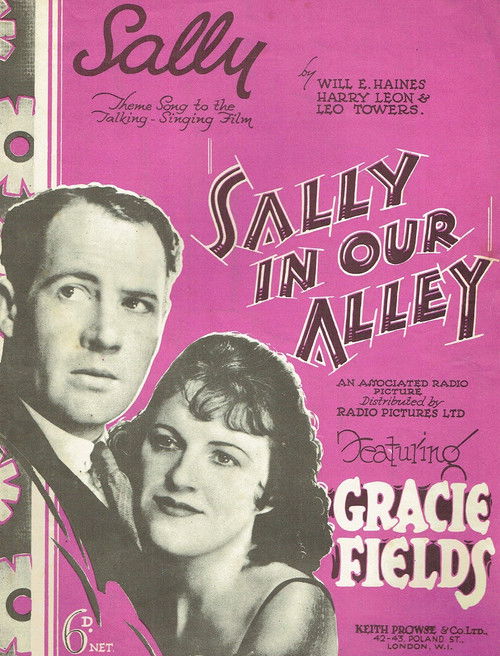
Representation Score
Limited
1931
Director
Maurice Elvey
Runtime
74 minutes
Average Rating
No ratings yetNew Showbiz Analysis
Sally in Our Alley is a period romance that centers on a female protagonist's emotional journey following the First World War. While the film provides a female-driven perspective, the narrative remains anchored in the social and romantic conventions of the early 1930s. The story relies heavily on traditional romantic clichés, specifically a woman's connection to a male partner. This focus on conventional sentimentalism limits the film's ability to offer a more complex or subversive social critique. Ultimately, the film functions as a standard commercial production of its era. It lacks the depth or diverse representation necessary to move beyond a traditional, homogeneous framework.
Category Breakdown
The film follows a traditional romantic storyline centered on a woman mourning her partner. There is no evidence of LGBTQ+ identities or critiques of the assumption that everyone is straight or cisgender.
A female protagonist provides a central narrative focus. However, her role appears tied to traditional romantic clichés and her relationship with a man.
The production likely adheres to the homogeneous casting standards of 1931 British cinema. No evidence of ethnic blending or diverse casting is present.
The story focuses on post-WWI Western values and the preservation of the family unit. It follows conventional sentimentalism rather than challenging social institutions.
There is no documented evidence of characters navigating physical, neurodivergent, or mental health disabilities.
Present on Screen
Limited or Absent
Official Synopsis
A woman believes her boyfriend died in the First World War, but he is now looking for her
1929
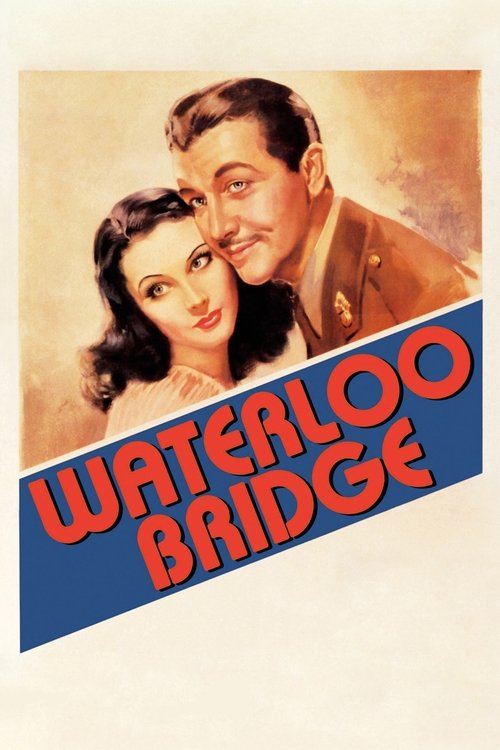
1940
1932
1934
1934
1929
1929

1936
No reviews yet. Be the first to share your thoughts on this movie!
Use the rating form above to leave a star rating and optional review.