
Due strani papà
1984
No user ratings available yet
Representation score: 2.3 out of 10
Representation Score
Minimal
1996
Director
Renato Pozzetto
Runtime
100 minutes
Average Rating
No ratings yetNew Showbiz Analysis
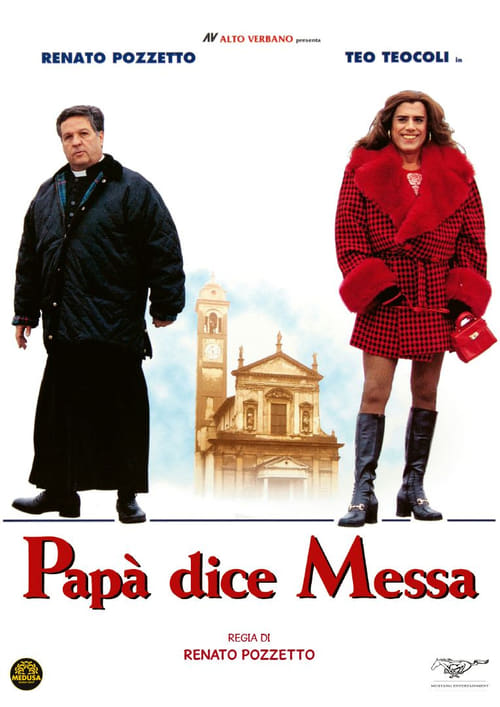
Papà dice messa is a conventional domestic comedy that adheres to the standard social and religious frameworks of 1990s Italian cinema. It functions primarily to reinforce established hierarchies rather than subvert them. The film relies on traditional archetypes, centering the story on a patriarchal figure and a traditional family unit. This approach limits the narrative's ability to explore multiple aspects of identity or diverse social perspectives. Ultimately, the work serves as a product of its era and genre, prioritizing localized, traditional storytelling over systemic representation or cultural critique.
Category Breakdown
The film focuses on a traditional family structure involving a priest and his biological son. There are no LGBTQ+ characters or critiques of heterosexual norms present.
The narrative relies on traditional gender roles and a patriarchal focus. While Matilda drives the plot through her pregnancy, the story remains centered around the male protagonist's journey.
The cast appears homogeneous, reflecting a localized Italian social environment. There is no evidence of diverse ethnic backgrounds or race-bent casting within the setting.
The Catholic Church serves as the central theme for this domestic comedy. The film reinforces traditional religious and family views rather than challenging them.
There is no mention of characters with visible or invisible disabilities in the narrative. The focus remains strictly on the central family drama.
Present on Screen
Limited or Absent
Official Synopsis
Father Arturo is a suburban parish priest, full of goodwill despite the absenteeism of his parishioners and the "harassment" from his bishop. One day, Francesco, the son he secretly had twenty years earlier, shows up at the church. His girlfriend, Matilda, is pregnant—Father Arturo is about to become a grandfather! The next day, Francesco disappears, and the priest and the girl set out to find him.
1984
2004
2012
1983
1985
1983
1995
2000
No reviews yet. Be the first to share your thoughts on this movie!
Use the rating form above to leave a star rating and optional review.