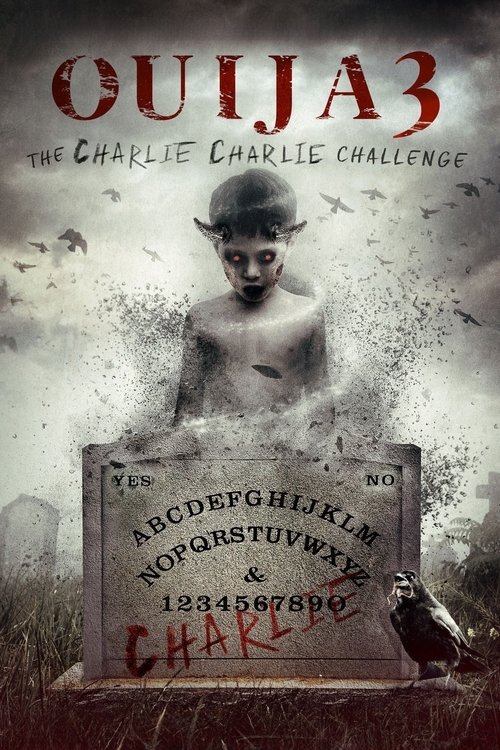
Ouija 3: The Charlie Charlie Challenge
2016
No user ratings available yet
Representation score: 4.1 out of 10
Representation Score
Limited
2011
TV-PGDirector
Terry Ingram
Runtime
23 minutes
Average Rating
No ratings yetNew Showbiz Analysis
The film opens on the blue glow of a computer monitor, isolating a group of boys in a suburban basement. This image sells a specific anxiety: the digital world as a predatory space that invades the safety of the home. The narrative argues that unchecked engagement with technology leads to physical destruction, a cautionary tale wrapped in low-budget horror. The camera favors the victims, lingering on their fear and confusion, while the antagonist, Major Mayhem, remains a glitchy, abstract threat. The ending is punitive, rewarding the horror of the unknown and punishing the hubris of the players. There is no redemption arc; the group’s collective failure to respect the boundaries of the digital world results in their physical destruction. The film’s argument is thin, relying on jump scares and distorted audio rather than complex character development. It treats the digital world as a neutral medium through which evil passes, without critiquing the technology itself. The last image is a cut to black, leaving the audience in the dark and reinforcing the idea that the user is never the master of the machine.
Category Breakdown
No queer characters or same-sex intimacy appear. The boys’ bond is strictly platonic, serving the horror premise without exploring identity or romantic tension.
The cast is exclusively male, with Kelly leading and Gooch providing comic relief. A mother appears only as a domestic voice, reinforcing traditional roles without challenging them.
The group is predominantly white, with Johnny Ji offering a single instance of Asian representation. His character functions as a standard peer without specific cultural depth or narrative weight.
Suburban domesticity and early-2010s gaming culture form the neutral backdrop. The film uses these familiar settings to ground the supernatural threat without critiquing the institutions themselves.
No characters display physical, sensory, or cognitive disabilities. The horror relies on physical survival and jump scares rather than exploring impairment or accessibility.
Present on Screen
Limited or Absent
Official Synopsis
Kelly and his friend Gooch receive a mysterious new game called 'Zee Town' that they got from a stranger named the Game Master. However, it turns out this game is actually real.
2016

2015
2010
2006
2011
2018
2010
2005
No reviews yet. Be the first to share your thoughts on this movie!
Use the rating form above to leave a star rating and optional review.