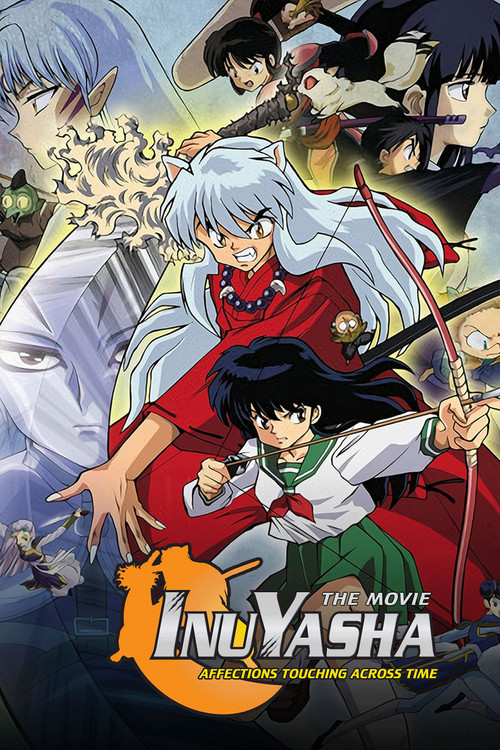
Inuyasha the Movie: Affections Touching Across Time
2001
No user ratings available yet
Diversity score: 5.3 out of 10
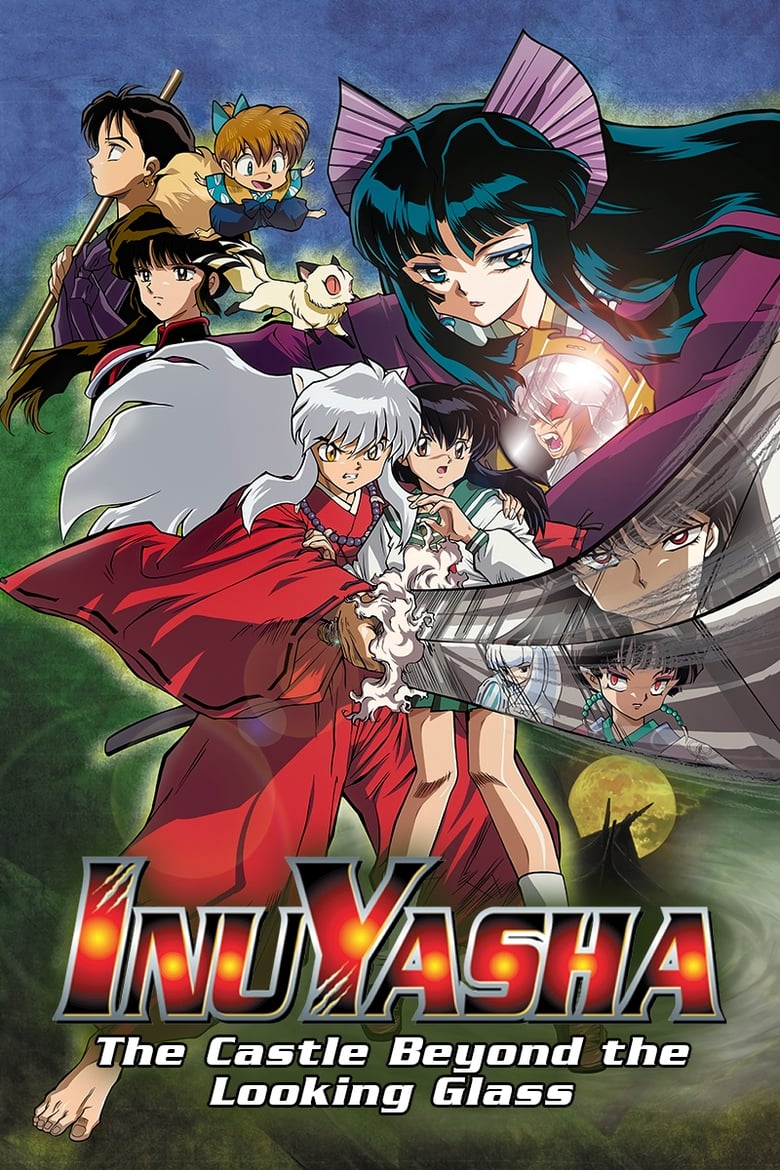
2002
PG-13Director
Toshiya Shinohara
Runtime
100 minutes
Average Rating
No ratings yetSynopsis
With their most formidable foe vanquished, Inuyasha and his comrades begin returning to their everyday lives. But their peace is fleeting as another adversary emerges: Kaguya, the self-proclaimed princess from the Moon of Legend, hatches a plot to plunge the world into an eternal night of the full moon. Inuyasha, Kagome, Miroku, Sango and Shippou must reunite to confront the new menace.
Overall Score
Fair
Category Breakdown
LGBTQ+ Representation
The film lacks explicit depictions of same-sex intimacy or non-cisnormative identities. Character dynamics focus on the established heterosexual tension between Inuyasha and Kagome.
Gender Representation
Female characters possess significant agency, with Kagome providing essential spiritual and emotional support. The antagonist, Kaguya, acts as a powerful, independent force rather than a damsel.
Racial & Ethnic Diversity
Diversity is explored through a species-based metaphor involving humans and demons. Inuyasha’s hybrid identity serves as a proxy for navigating complex social standings and origins.
Religious & Cultural Diversity
The story utilizes Shinto-adjacent spiritual elements like purification within a traditional moral framework. It focuses on protecting the world rather than critiquing religious institutions.
Disability Representation
There are no prominent depictions of visible or invisible disabilities. No neurodivergence or chronic illness serves as a central driver for the character arcs.
Strengths
Areas for Improvement
AI Analysis
The film functions as a conventional fantasy adventure that prioritizes genre-standard storytelling. It succeeds in granting meaningful agency to its female leads, moving beyond passive tropes to ensure they are vital to the group's survival. While the narrative uses the 'hanyō' archetype to explore hybrid identity and social belonging, it remains culturally homogeneous within its Sengoku-period setting. The lack of explicit LGBTQ+ representation or systemic critique keeps the score within a moderate range. Ultimately, the work provides a stable, character-driven experience that explores identity through a supernatural lens without attempting to subvert broader institutional or social norms.
2001

2011
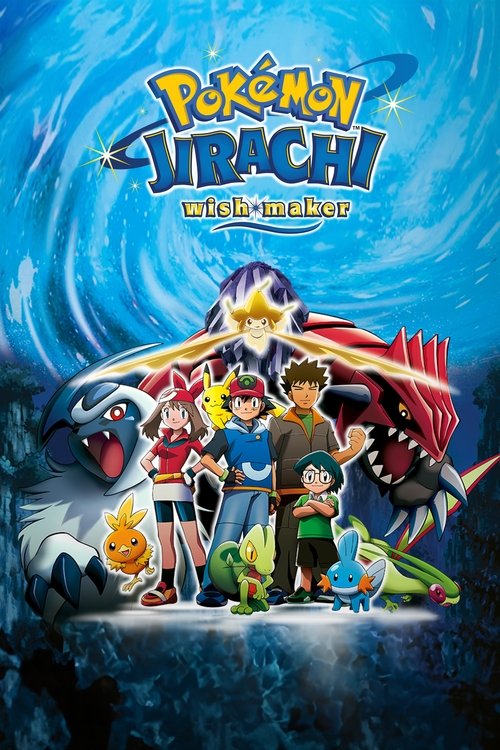
2003

2003

2004
No reviews yet. Be the first to share your thoughts on this movie!
Use the rating form above to leave a star rating and optional review.