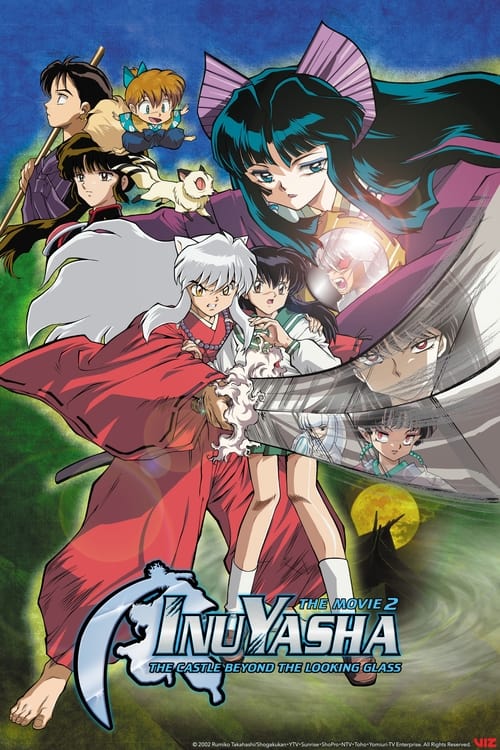
Inuyasha the Movie 2: The Castle Beyond the Looking Glass
2002
No user ratings available yet
Representation score: 3.1 out of 10

Representation Score
Good
2011
Director
Ken'ichi Ishikura, Akiyuki Shinbo
Runtime
80 minutes
Average Rating
No ratings yetNew Showbiz Analysis
The film emphasizes character adventure within a fantasy genre, prioritizing action over deconstructing social hierarchies. Its strongest progressive element is the active role given to its female cast, which contrasts with traditional male-centric adventure stories. While the setting fosters multicultural interaction through its blend of Welsh and Japanese cultures, the narrative stays focused on fantasy morality and magical lineage. It does not deeply engage with broader social critiques or identity politics. Overall, the work adheres to established genre conventions, emphasizing magical lineage and tactical problem-solving over social critique.
Category Breakdown
The film centers on the interpersonal relationships between the male protagonist and his female students. It does not explore explicit queer romantic storylines or challenge assumptions about straight relationships.
The plot is driven by 31 female characters who play important tactical and magical roles. They avoid being passive supporting characters and instead take active roles in the story.
The story combines Western and Eastern cultural elements by placing a Welsh wizard in a Japanese school. However, magical heritage often overshadows ethnic identity.
Themes include non-traditional family structures and magical contracts that redefine social obligations. The protagonist's father uses magic for humanitarian purposes through NGOs.
The narrative focuses on physical combat and magical abilities. Characters do not navigate visible or invisible disabilities with significant control over their situations.
Present on Screen
Limited or Absent
Official Synopsis
The story is centred around Negi Springfield, a ten-year-old wizard from Wales, who dreams of becoming a Magister Magi like his missing father, a special wizard who uses his powers to help normal people, using covers such as working for NGOs. Initially appointed as an English teacher at Mahora Academy in Japan he becomes a teacher to a middle school class of 31 older girls. However, the peaceful school life is quickly disturbed as people from his father's past appear and Negi has to form contracts with various students to overcome the new dangers. Finally he embarks on a journey to the Magic World together with his partners to find his long-lost father. This film is the climax to their adventures depicted in the Shiroki Tsubasa Ala Alba and Mou Hitotsu no Sekai OVAs.
2002
2001
2012
2014
2013
2017
2004
2019
No reviews yet. Be the first to share your thoughts on this movie!
Use the rating form above to leave a star rating and optional review.