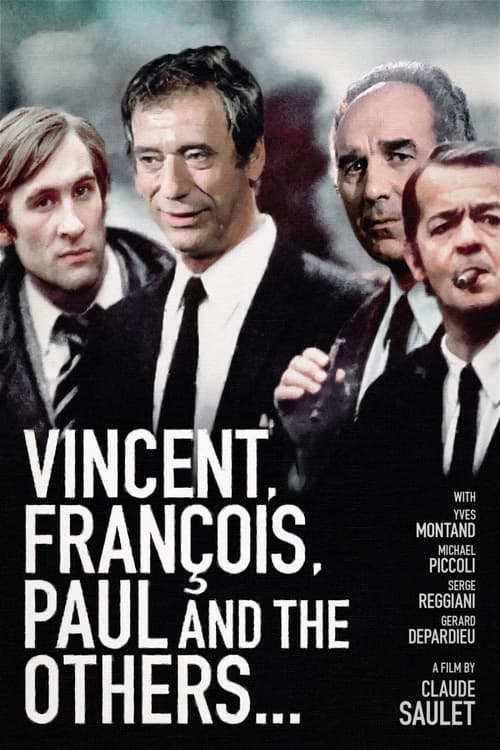
Vincent, Francois, Paul and the Others
1974
No user ratings available yet
Representation score: 5.0 out of 10

Representation Score
Good
2005
Director
Jacques Otmezguine
Runtime
105 minutes
Average Rating
No ratings yetNew Showbiz Analysis
The film excels in its psychological depth, particularly regarding disability and female autonomy. Olivier’s struggle with physical limitations and Pascale’s pursuit of individualistic paths provide a sophisticated look at mid-life crises. However, the work lacks breadth in its social composition. The narrative remains centered on a homogeneous group, offering little in the way of racial or LGBTQ+ representation. Ultimately, the film is a character study that deconstructs social contracts. It trades broad inclusivity for a concentrated, intimate examination of personal and systemic instability.
Category Breakdown
The film focuses on the breakdown of traditional romantic structures rather than celebrating LGBTQ+ identities. There is no evidence of LGBTQ+ characters being central to the plot.
Pascale provides a strong depiction of female autonomy and independence. She navigates her own desires and professional identity, challenging conventional domestic roles.
The narrative appears to focus on a homogeneous social circle. There is no evidence of significant racial blending or diverse casting within this European dramatic framework.
The film critiques traditional Western institutions like the nuclear family. It portrays marriage as a site of tension and fragility rather than a stable foundation.
Olivier’s transition to being wheelchair-bound offers a nuanced look at physical disability. The film explores the psychological implications of his condition without relying on sentimental clichés.
Present on Screen
Limited or Absent
Official Synopsis
Olivier, Rémi and Pascale are three friends who have known each other since childhood. As they approach middle age, they each experience something of a crisis in their lives. Olivier, a doctor before becoming wheelchair bound, faces a bleak future after the break up of two relationships. The fact that Rémi and his wife Estelle are unable to have children puts an increasing strain on their marriage. And Pascale, a filmmaker, is on the point of leaving her husband to pursue an affair with an opportunistic career politician.
1974
2007

2003
2004
2003
1981
1994
1985
No reviews yet. Be the first to share your thoughts on this movie!
Use the rating form above to leave a star rating and optional review.