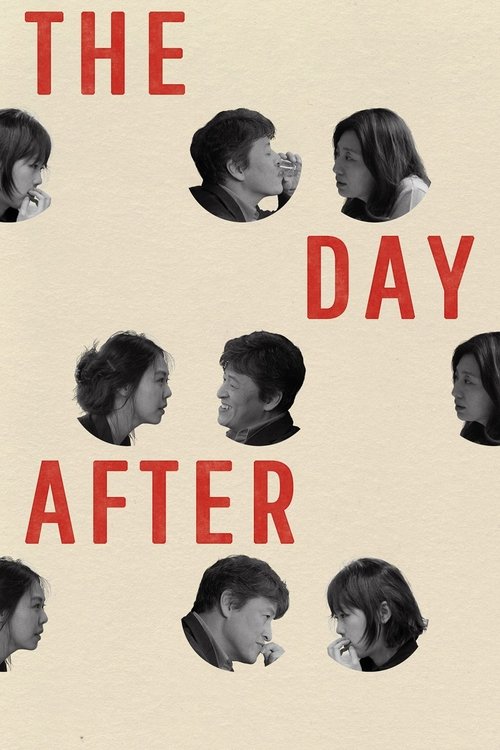
The Day After
2017
No user ratings available yet
Diversity score: 4.5 out of 10

2016
Director
Kim Jong-kwan
Runtime
94 minutes
Average Rating
No ratings yetSynopsis
Eun-hee is an actress who also plays in her real life. One day, she meets three different men and changes her own character each time she dates them, just like taking a role in the play. One is clever and polite, another is boyish and honest, and the last seems elegant and mature. Though each of her performances full of lies seems going smoothly, everything is about to be messed up at the end.
Overall Score
Fair
Category Breakdown
LGBTQ+ Representation
The film lacks explicit queer narratives or same-sex intimacy. While the protagonist's shifting personas suggest a departure from heteronormative authenticity, the narrative does not center non-cisnormative identities.
Gender Representation
The film explores the female experience through a protagonist who manages social perceptions via performative roles. She subverts traditional submissive archetypes by using emotional adaptability to navigate her environment.
Racial & Ethnic Diversity
The cast and setting are predominantly homogeneous, reflecting a specific South Korean cultural milieu. It does not engage in color-blind casting or the intentional blending of diverse ethnic backgrounds.
Religious & Cultural Diversity
The story uses moral relativism to frame the protagonist's lies as survival mechanisms. It offers a subtle critique of urban social pressures and the blurring of truth and performance.
Disability Representation
There is no prominent depiction of physical or neurodivergent disabilities. The film maintains a neutral stance, avoiding the use of disability as a plot device or tool for mockery.
Strengths
Areas for Improvement
AI Analysis
Worst Woman is a sophisticated character study that prioritizes psychological depth over demographic breadth. Its primary strength lies in its deconstruction of identity, portraying personhood as a fluid, situational construct rather than a static trait. The film excels in its nuanced portrayal of gendered performance. By centering on a woman's agency to manipulate her social roles, it moves beyond traditional archetypes to show how individuals navigate complex social hierarchies. However, the film remains limited by its demographic homogeneity and lack of explicit LGBTQ+ representation. While it offers a deep look at individual agency, it does not engage with a wide spectrum of racial or sexual identities.
2017

2018

1990

2008

2008

2008

2020

2018

2020

2012

2006

2004
No reviews yet. Be the first to share your thoughts on this movie!
Use the rating form above to leave a star rating and optional review.