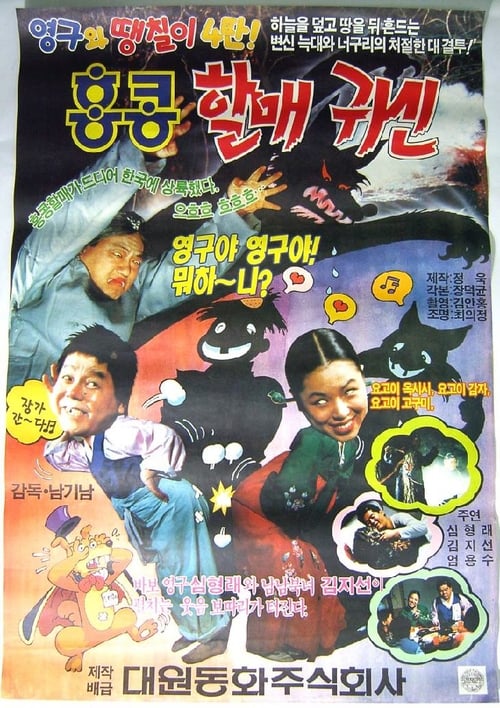
Young-gu and Ddaeng-chil 4: Hong Kong Granny Ghost
1991
No user ratings available yet
Representation score: 3.2 out of 10
Representation Score
Fair
1989
Director
Nam Ki-nam
Runtime
97 minutes
Average Rating
No ratings yetNew Showbiz Analysis
Young-gu and Ddaeng-chil is a traditional genre piece that relies heavily on established folklore and Western horror clichés. The narrative follows a standard conflict between a child, a monk, and supernatural entities, adhering to the archetypes common in late 20th-century South Korean cinema. While the film creatively blends local spiritualism with global icons like Frankenstein and Dracula, it lacks complexity in its characters and themes. The characters primarily serve to advance the plot within a conventional moral framework, reinforcing traditional social and gender roles.
Category Breakdown
The film does not include any LGBTQ+ characters or themes related to non-assuming gender matches what was assigned at birth identities. The plot revolves around traditional supernatural conflicts.
The story focuses on a male child and a male monk, reinforcing traditional masculine archetypes without challenging gender roles.
The film's setting and cast are predominantly Korean. It incorporates Western icons like Dracula but uses them as part of a genre pastiche rather than a deeper exploration of racial dynamics.
The plot is driven by Buddhist iconography and spiritualism. The film follows a traditional moral structure of good versus evil without critiquing religious institutions.
Yong-gu is described as a 'slow child' and his condition is used as a plot device for the ghosts. This portrayal risks treating neurodivergence as a mere narrative convenience.
Present on Screen
Limited or Absent
Official Synopsis
Ghosts come visiting to a deserted village. A child named Yong-gu approaches the deserted house where the ghosts are plotting away. The ghosts are afraid that their plans of conquering the human world may be compromised but breath easily when they realize that Yong-gu is a slow child. Thirsty for blood, the ghosts kill some people. Yong-gu suspects it is the ghosts' deed but no one believes him when he says so. Yong-gu goes to a Buddhist monk but the monk already knows about the ghosts. On a night with a full moon when Frankenstein is to be awakened, the monk, Yong-gu, and the children go to the deserted house. With the monk's powers, they are able to fight against the ghosts. But the monk falls to Dracula's attack. Dracula falls when he is hit by a rubber shoe thrown in haste…
1991
1985
1988
1990
1998
1990
1983

1990
No reviews yet. Be the first to share your thoughts on this movie!
Use the rating form above to leave a star rating and optional review.