
A Matter of Dignity
1958
No user ratings available yet
Representation score: 1.9 out of 10
Representation Score
Fair
1948
UnratedDirector
Luis César Amadori
Runtime
120 minutes
Average Rating
No ratings yetNew Showbiz Analysis
This 1948 melodrama centers on the tension between economic hardship and the allure of sudden luxury. While it offers a central role for a female protagonist, the narrative remains anchored in the social and moral hierarchies of its time. The film emphasizes class-based struggles and the pursuit of security through mysterious intervention. It operates as a traditional social drama rather than a critique of systemic structures. Ultimately, the work focuses on maintaining elegance amid poverty, reinforcing conventional gender and class roles without challenging them.
Category Breakdown
The story focuses on heterosexual relationships and economic transactions. It does not include non-assuming gender matches what was assigned at birth identities or challenge straight-centered structures.
Nancy is a central female character, but her role is defined by her response to economic instability. Her journey follows traditional gender clichés, focusing on gaining wealth through patriarchal means.
The film reflects the demographic norms of 1948 Argentine cinema. It highlights class differences rather than exploring the intersection of race and ethnicity.
The story uses traditional religious themes to resolve conflicts. It adheres to conventional mid-century storytelling about individual success and moral frameworks.
An elderly beggar appears as a marginal character. This figure serves as a symbol of misfortune rather than a fully developed character with complex identities.
Present on Screen
Limited or Absent
Official Synopsis
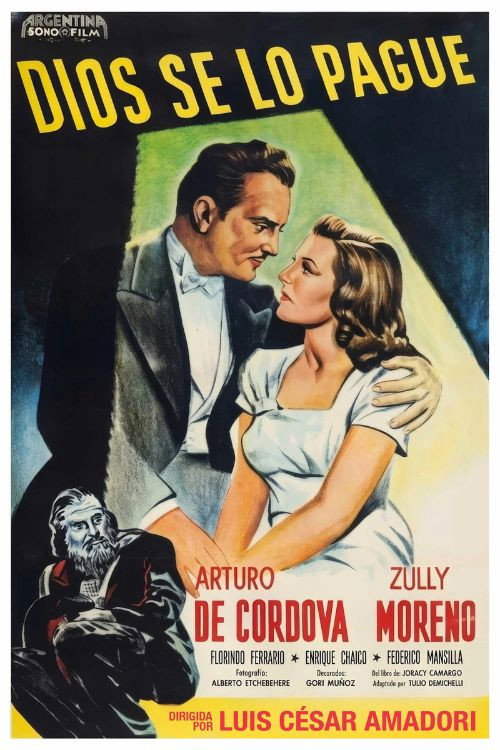
Nancy, a gambler's wife, holds elegance to disguise their poverty. While she waits, dreaming of a wealthy man to appear and save her from that situation, she talks to an old beggar at the door of a casino. Soon after, a mysterious man offers her a life of luxury.
1958
1922
1953
1953
1954

1924
1947
1961
No reviews yet. Be the first to share your thoughts on this movie!
Use the rating form above to leave a star rating and optional review.