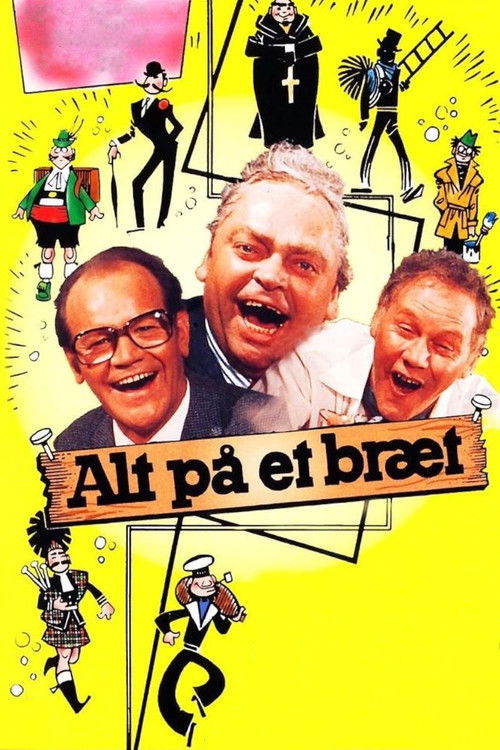
Going for Broke
1977
No user ratings available yet
Representation score: 1.1 out of 10

Representation Score
Limited
1964
Director
Sven Methling
Runtime
99 minutes
Average Rating
No ratings yetNew Showbiz Analysis
The film is a character-driven comedy that examines the intersections of social class and legality. It uses a 'criminal-meets-authority' dynamic to explore the gray areas of social conduct. While the film lacks significant markers of diverse representation or multi-layered identity, it excels in deconstructing the perceived infallibility of legal and social institutions. Ultimately, the narrative favors situational ethics and challenges the rigidity of institutional integrity.
Category Breakdown
The film centers on male camaraderie and a plot involving compromising photographs. It does not include any non-cisgender identities or critiques of the assumption that everyone is straight or cisgender.
The narrative focuses almost entirely on male characters. While the title mentions Rosa, the main plot drivers are the male characters.
Characters are described using specific 1960s professional archetypes. The story adheres to mid-century European social structures without challenging ethnic hierarchies.
The film explores moral relativism by disrupting traditional hierarchies. A judge collaborates with a criminal to bypass institutional safeguards.
There is no mention of characters dealing with physical, sensory, or neurodivergent conditions. No assessment can be made regarding disability representation or its use as a plot device.
Present on Screen
Limited or Absent
Official Synopsis
In a hospital's five-bed room—room number 13—there are five very different men with very different backgrounds: District Court Judge Winther, fashion designer Philip André, bank teller Madsen, the incorrigible burglar Herluf "Smukke Arne" Jensen, and legation secretary Konrad Konradsen. The legation secretary has done something foolish and fallen into the clutches of the blackmailer Helmer Gamtofte. He is in possession of some compromising photographs, which he keeps in a safe deposit box at the bank where Madsen works. The camaraderie that develops in room 13 becomes the driving force that prompts the district court judge to suggest that "Smukke Arne" help Konradsen break into the bank and steal the photos.
1977
1960
1982

1964
1925

1958
2005
1955
No reviews yet. Be the first to share your thoughts on this movie!
Use the rating form above to leave a star rating and optional review.