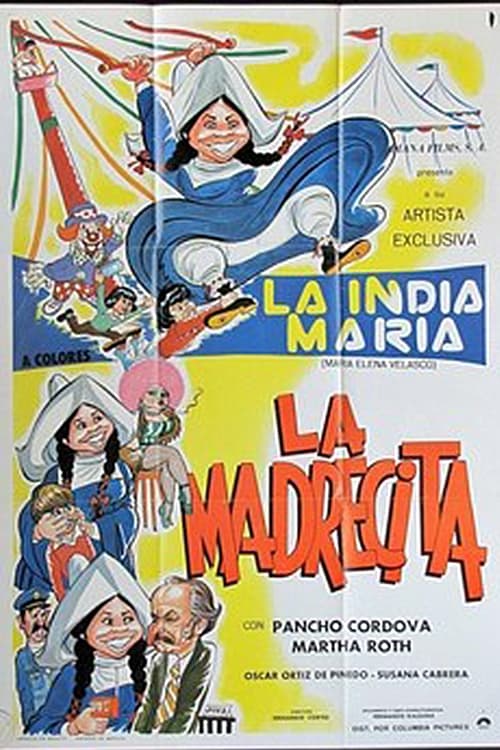
La madrecita
1974
No user ratings available yet
Diversity score: 5.6 out of 10

1950
PGDirector
Fernando Cortés
Runtime
85 minutes
Average Rating
No ratings yetSynopsis
Two women form The League of Girls invite an interesting repertoire of young ladies to become members and get rid of men and all the evils that come with them.
Overall Score
Fair
Category Breakdown
LGBTQ+ Representation
The film lacks explicit depictions of same-sex intimacy or non-cisnormative identities. While the focus on female solidarity suggests a potential subtextual rejection of heteronormative structures, no overt queer representation is present.
Gender Representation
The narrative actively challenges mid-century gender hierarchies by centering female agency. By positioning women as the primary drivers of the plot, the film disrupts traditional expectations of domesticity and male leadership.
Racial & Ethnic Diversity
The film likely features a homogeneous cast consistent with 1950s production standards. There is no evidence of non-white or non-Anglo-Saxon majority casting within the available records.
Religious & Cultural Diversity
The story critiques traditional Western social institutions and the patriarchal family unit. It frames male-dominated structures as sources of evil, suggesting a narrative leaning toward social skepticism.
Disability Representation
There is no evidence of characters with visible or invisible disabilities in the film's synopsis or verified context.
Strengths
Areas for Improvement
AI Analysis
The League of Girls stands out for its thematic subversion of 1950s gender norms. By centering a female-led organization designed to exclude men, the film provides a rare comedic critique of patriarchal social structures and domestic submissiveness. However, the film's impact is limited by the historical constraints of its era. The lack of verifiable racial diversity and the absence of explicit LGBTQ+ representation suggest a production rooted in the homogeneous standards of mid-century cinema. Ultimately, the film is a study in gender-centric social structures. It offers a glimpse into early attempts to challenge traditional hierarchies, even if it remains constrained by the era's lack of intersectional depth.
1974
1978
1974
1979
1975
1977
1977
1973
1971
2016
1974
2015
No reviews yet. Be the first to share your thoughts on this movie!
Use the rating form above to leave a star rating and optional review.