
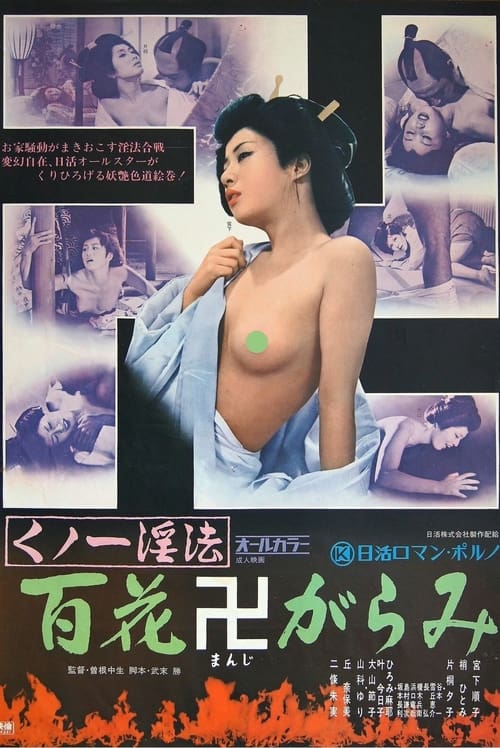
Battle of the Amazons
1973
No user ratings available yet
Representation score: 5.1 out of 10
Representation Score
Fair
1974
Director
Chūsei Sone
Runtime
76 minutes
Average Rating
No ratings yetNew Showbiz Analysis
The film stands out for its subversion of traditional gender hierarchies, positioning women as central agents of both magical and military efficacy. By making the Fumi ninjas the primary tactical force, it challenges passive female clichés common in historical action cinema. However, the narrative remains tied to conventional social structures. The resolution relies on a traditional marriage to integrate the female leader into the existing political hierarchy, which limits the scope of its progressive themes. Ultimately, while the film explores unconventional methods of combat and power, it operates within a culturally homogeneous and traditionally romantic framework.
Category Breakdown
The story focuses on heterosexual and cisgender relationships, particularly the marriage between Tsukinojo and Lord Akizuki. There are no explicitly queer identities or non-traditional romantic pairings.
The film challenges traditional gender roles by centering women in specialized combat roles. The Fumi ninjas serve as the primary tactical force, using femininity as a source of powerful magic.
Set in historical Japan, the cast and setting are ethnically uniform. The film reflects the demographic realities of its specific historical and cultural context.
The narrative incorporates mythic morality and non-standard combat methods rather than orthodox realism. The resolution explores the balance between unconventional warrior identities and established institutional power.
There is no evident portrayal of physical or neurodivergent disabilities within the narrative.
Present on Screen
Limited or Absent
Official Synopsis
In historical times, the Shogun family employs a group of Iga ninjas to take over the Akizuki clan's lands. The Akizuki hire the Fumi ninjas, a group of female warriors who enhance their fighting ability with sexual magic such as the "white snake spell". When the Akizuki emerge victorious, Tsukinojo, the leader of the Fumi ninjas, marries Lord Akizuki.
1973

1992
1964

1972
1972

1977

1994

1987
No reviews yet. Be the first to share your thoughts on this movie!
Use the rating form above to leave a star rating and optional review.