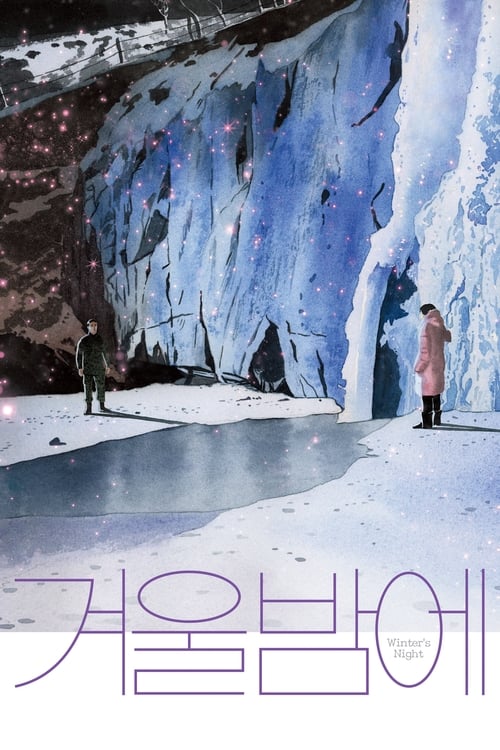
Winter's Night
2020
No user ratings available yet
Representation score: 3.7 out of 10

Representation Score
Fair
2020
Director
Kim Hee-jung
Runtime
89 minutes
Average Rating
No ratings yetNew Showbiz Analysis
A French Woman functions as a nuanced character study that utilizes a non-linear temporal structure to examine memory and identity. By juxtaposing a woman's life in Paris with her past in Korea, the film disrupts conventional chronological storytelling to explore cultural displacement. The film succeeds in centering a demographic often sidelined in mainstream cinema—women in their late 40s. This choice allows for a sophisticated exploration of ability to act and the complexities of mid-life transitions. However, the narrative remains somewhat neutral regarding specific identity politics. While it avoids rigid domestic clichés, it lacks explicit representation of diverse sexual orientations or specific disability narratives.
Category Breakdown
The film focuses on a divorce and platonic reunions, emphasizing personal autonomy rather than rigid domestic roles.
The story centers on a woman in her late 40s, granting her a significant role in driving the narrative and challenging traditional wife archetypes.
The film explores the intersection of Korean identity and European residency, challenging monolithic depictions of Korean life through the lens of the diaspora.
The film offers a philosophical view of life transitions and personal truth, prioritizing individual paths over traditional social or familial expectations through its use of time reversal.
There is no evidence of characters navigating physical or neurodivergent disabilities within the narrative.
Present on Screen
Limited or Absent
Official Synopsis
Mira in her late 40's has been living in Paris for around 20 years. Having just divorced her French husband, she decides to visit Korea, and meets her old friends Young-eun and Sung-woo. While having a cheerful time in the bar, Mira goes to the toilet and after she returns, time is reversed back to 19 years ago. It is the day of Mira’s farewell party, before she left to France.
2020

2012
2016
2000

2017

2023

2017

2018
No reviews yet. Be the first to share your thoughts on this movie!
Use the rating form above to leave a star rating and optional review.