Arizona Days
1928
No user ratings available yet
Representation score: 1.3 out of 10
Representation Score
Minimal
1936
PassedDirector
Albert Ray
Runtime
57 minutes
Average Rating
No ratings yetNew Showbiz Analysis
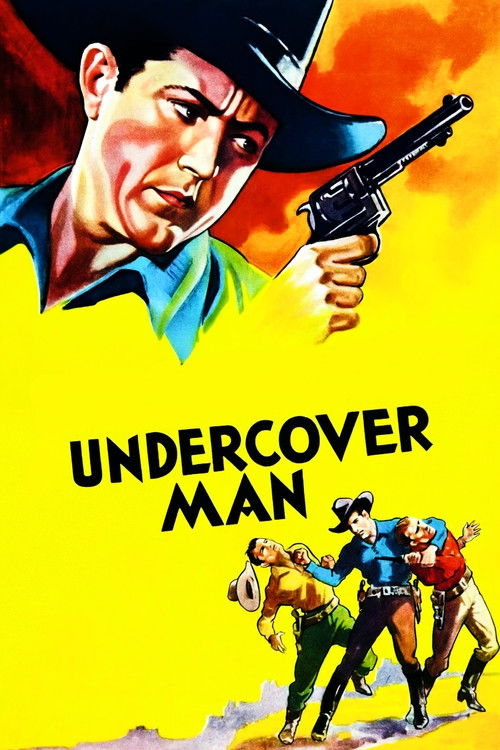
Undercover Man is a standard B-Western that operates within the rigid genre conventions of the 1930s. The narrative relies on a binary moral landscape where justice is restored through individual heroism and the enforcement of corporate and legal structures. The film reinforces traditional hierarchies rather than challenging them. By focusing on the conflict between a Wells Fargo operative and a crooked sheriff, the story prioritizes masculine power struggles and institutional stability over diverse perspectives. Ultimately, the film serves as a celebration of established social norms. It offers minimal disruption to the conventional identity-based expectations of its era, functioning as a straightforward tale of law and order.
Category Breakdown
The film adheres to the strict social constraints of 1936 and lacks any depiction of non-straight relationships or same-sex intimacy, focusing instead on masculine frontier archetypes.
Narrative ability to act is concentrated in male characters, specifically the Wells Fargo operative and the corrupt sheriff. Female characters do not possess significant roles or challenge traditional gender hierarchies.
The film likely reflects the era's tendency toward homogeneous casting, centering on Anglo-Saxon protagonists and relegating non-white characters to peripheral or stereotypical roles.
The story reinforces traditional Western values and the sanctity of private enterprise. It promotes a clear moral absolutism that celebrates the restorative power of established social and economic systems.
There is no evidence of characters with visible or invisible disabilities. Disability is not utilized as a narrative device within this production.
Present on Screen
Limited or Absent
Official Synopsis
An operative from the Wells Fargo company goes undercover to trap a crooked sheriff and his equally nefarious hirelings in this standard B-Western from A.W. Hackel's low-budget Supreme Pictures Corp.
1928
1951
1940
1938
1937
1942
1936
1945
No reviews yet. Be the first to share your thoughts on this movie!
Use the rating form above to leave a star rating and optional review.