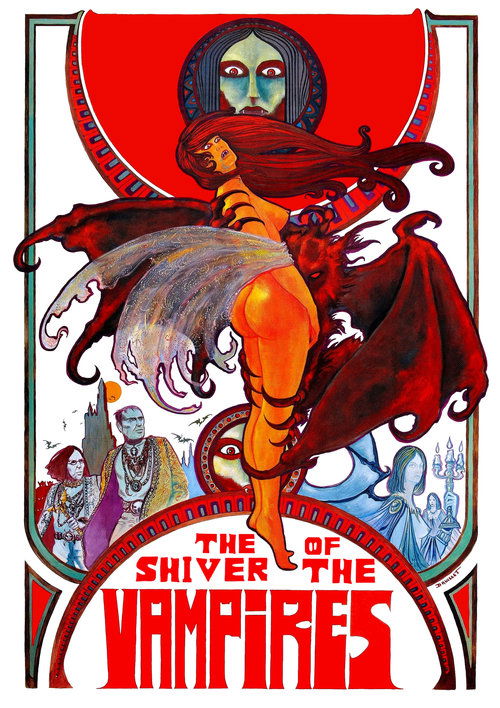
The Shiver of the Vampires
1971
No user ratings available yet
Representation score: 4.6 out of 10
Representation Score
Excellent
1972
RDirector
Jean Rollin
Runtime
87 minutes
Average Rating
No ratings yetNew Showbiz Analysis
Jean Rollin’s work stands out for its emphasis on female autonomy and queer aesthetics. By focusing on the psychological experiences of its women within a surreal, dreamlike framework, the film challenges traditional genre conventions. However, the film’s cast remains predominantly white, limiting its multi-layered reach due to the era's demographic norms. Ultimately, the film excels in creating an atmosphere of moral and existential ambiguity, deconstructing traditional authority and domestic stability through its exploration of psychological and existential themes.
Category Breakdown
The film uses dream-like sequences and ambiguous intimacy to challenge traditional romantic expectations. Although there are no explicit LGBTQ+ identities, the subtextual tension and aesthetic choices create a sense of queerness that disrupts conventional romantic narratives.
Women play central roles in the narrative, navigating a gothic landscape with existential independence. Men in the film often appear as secondary or decaying figures, highlighting the psychological journeys of the female characters.
The cast is predominantly white, reflecting the demographic norms of 1970s European horror films. There is little evidence of diverse racial representation within this French production.
The film critiques traditional institutions and the sanctity of the home through its surrealist lens. It focuses on a secular exploration of mortality rather than adhering to religious or social codes.
Physical frailty is evident through the portrayal of an ailing vampire and the vulnerabilities of the protagonists. The film explores psychological and existential distress through these elements, rather than relying on simple caricatures.
Present on Screen
Limited or Absent
Official Synopsis
Two girls on the run get lost in the French countryside, and wind up in a haunted chateau occupied by an ailing vampire and his servants.
1971

1966
1968
1964
1975
1972
1973

1973
No reviews yet. Be the first to share your thoughts on this movie!
Use the rating form above to leave a star rating and optional review.