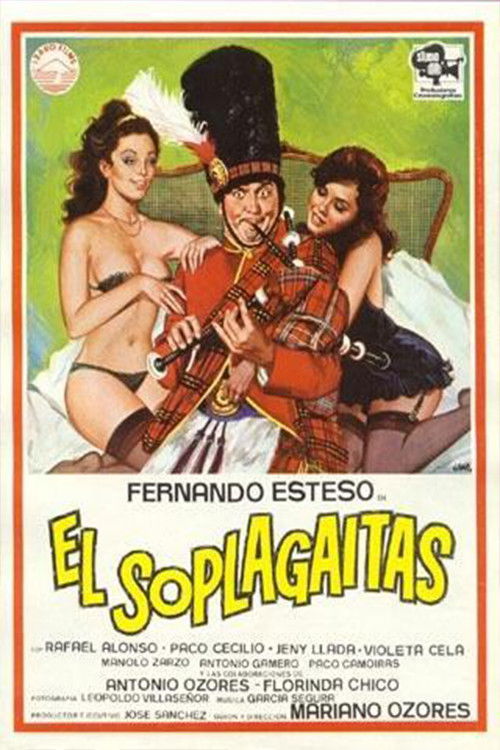
El soplagaitas
1981
No user ratings available yet
Representation score: 1.6 out of 10

Representation Score
Minimal
1983
Director
Mariano Ozores Puchol
Runtime
90 minutes
Average Rating
No ratings yetNew Showbiz Analysis
The Worker is a traditional social comedy that relies on the comedic tension of class deception. The narrative structure prioritizes the preservation of social standing and the maintenance of established family structures. While the film touches on the economic pressures facing the working class, it does so through a lens of conventional storytelling. It reinforces social hierarchies rather than offering a systemic critique of them. Ultimately, the film lacks multi-layered complexity. It functions as a populist comedy that emphasizes social cohesion and traditional roles over progressive or diverse representation.
Category Breakdown
The film focuses on a traditional nuclear family dynamic between a father and daughter. There are no LGBTQ+ characters or narratives addressing non-straight identities.
The story centers on a patriarchal figure managing a social crisis. While the daughter drives the plot, her role is limited to being the catalyst for her father's actions.
Set in Madrid, the narrative focuses on local class dynamics. The film centers on a homogeneous social group without diverse ethnic perspectives.
The film explores the performative nature of class during an economic crisis. However, it reinforces traditional community values by having friends collaborate to uphold a deceptive status quo.
The available information provides no mention of characters with visible or invisible disabilities.
Present on Screen
Limited or Absent
Official Synopsis
Manolo is an electrician, plumber, bricklayer ... a hard worker. To his friends Manolo strange fate that gives as much money wins. And when asked, he answers laconically Oh, if I told you! What counts is that Manolo has a daughter in one of the inner most expensive schools in Madrid, and that it believes that his father is a senior executive, as any parent of her companions. The problem begins when the school closed by economic crisis, and the girl has to come live with her father. But Manolo find the collaboration of his friends, who will make the eyes appear currante small as a great man of finance. Adaptation "Spanish" the American film "A Pocketful of Miracles".
1981
1997

2014
2013
1943

2000
1954
1955
No reviews yet. Be the first to share your thoughts on this movie!
Use the rating form above to leave a star rating and optional review.