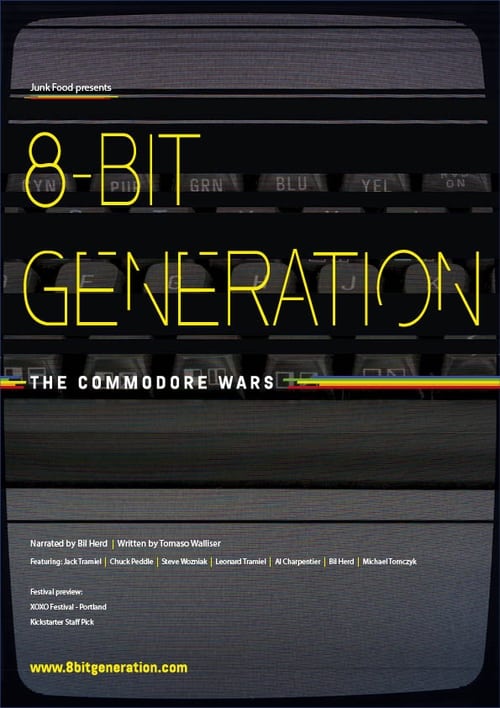
8 Bit Generation: The Commodore Wars
2016
No user ratings available yet
Representation score: 3.2 out of 10

Representation Score
Limited
2017
Director
Tomaso Walliser, Davide E. Agosta
Runtime
110 minutes
Average Rating
No ratings yetNew Showbiz Analysis
This documentary serves as a historical account of the digital revolution, emphasizing technological and economic milestones. The narrative revolves around Nolan Bushnell and the rise of Atari, naturally centering on the industry leaders of that time. Given the subject matter's focus on the male-dominated landscape of early Silicon Valley, the film reflects the structural biases of the late 1970s and early 1980s. It lacks representation of multiple aspects of identity, focusing instead on the business trajectory and the 'Age of Aquarius' lifestyle. Ultimately, the film adheres to a traditional industrial history framework. It captures the shift from creative counter-culture to the boom-and-bust cycles of the new economy without challenging social hierarchies or highlighting diverse perspectives.
Category Breakdown
The film focuses on the corporate history of Atari and the life of Nolan Bushnell. There are no LGBTQ+ characters or stories addressing non-straight relationships.
The documentary looks at the early days of Silicon Valley, dominated by male leaders. The focus on Nolan Bushnell highlights traditional masculine traits and visionary leadership.
The film centers on the technological movement in America. Given the historical context, the demographic was likely predominantly Anglo-Saxon, with no indication of a diverse audience.
The film explores the clash between the Age of Aquarius counter-culture and the rise of capitalism. It offers a retrospective on the shifts in Western economic institutions and social norms.
There is no information available regarding the portrayal of physical or neurodivergent disabilities within this documentary.
Present on Screen
Limited or Absent
Official Synopsis
Before Google, Yahoo and even Apple, before the Silicon Valley cliché of informal dress code, skateboards running the corridors and wild creativity became commonplace, one company embodied the digital economy lifestyle and business style: the one firm coming out of the Age of Aquarius was Atari. The story of Atari is two-thirds the story of Nolan Bushnell, founder and visionary, and one-third the first and probably biggest boom and bust of the new economy some 20 years before the new economy even existed. Atari was showing that technology is cool, way before the personal computer revolution took place and they were reaching out to an ever-growing audience with something that is still cool today: video games. Atari literally introduced the digital world to the mass consciousness.
2016

2013
2015

2014

2020
2015
2003

2013
No reviews yet. Be the first to share your thoughts on this movie!
Use the rating form above to leave a star rating and optional review.