
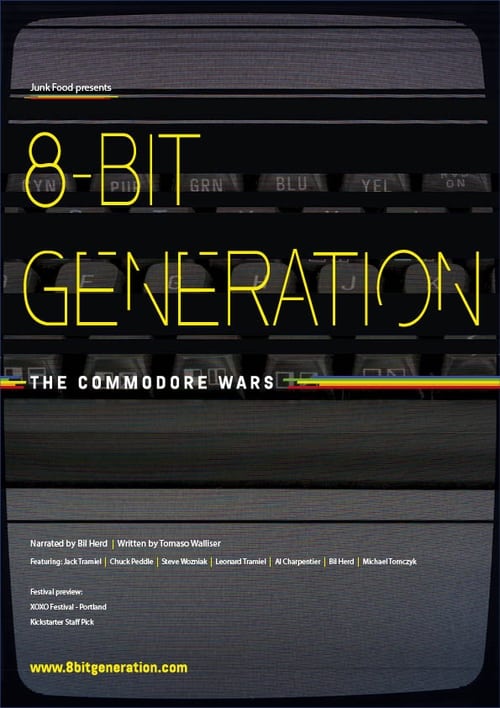
The Commodore Story
2018
No user ratings available yet
Representation score: 1.3 out of 10
Representation Score
Limited
2016
Director
Tomaso Walliser, Davide E. Agosta
Runtime
100 minutes
Average Rating
No ratings yetNew Showbiz Analysis
This documentary serves as a historical chronicle of the Commodore era, prioritizing technical chronology and corporate competition over social commentary. The narrative structure is dictated by archival footage and industry interviews, reflecting the demographic realities of the 1970s and 80s tech landscape. Because the subject matter is rooted in a specific Western industrial boom, the film lacks intentional approaches to address multi-layered themes. It functions as a celebration of progress rather than a tool for social subversion. Ultimately, the film adheres to a traditional historical framework, mirroring the era's existing social hierarchies and demographic imbalances.
Category Breakdown
The documentary focuses on corporate milestones and technological advancements. It does not include any explicit LGBTQ narratives or challenge the assumption that everyone is straight or cisgender.
The film highlights the era's gender imbalances in engineering and leadership. It documents a period where women were significantly underrepresented in the computing industry.
The narrative centers on a Western technological boom that was predominantly white and Anglo-Saxon. It does not explore multi-layered or non-Western perspectives.
The film chronicles competitive market mechanics and industrial history. It maintains a traditional historical perspective without prioritizing secularism or deconstructing Western institutional norms.
Neurodivergence and physical disabilities are not central themes. The film does not address these topics within its technological retrospective.
Present on Screen
Limited or Absent
Official Synopsis
The rise and fall of Commodore computers in the 70s and 80s as described by the people who created the companies and technologies.
2018

2013

2017

2018
2017
2014

2016
2013
No reviews yet. Be the first to share your thoughts on this movie!
Use the rating form above to leave a star rating and optional review.