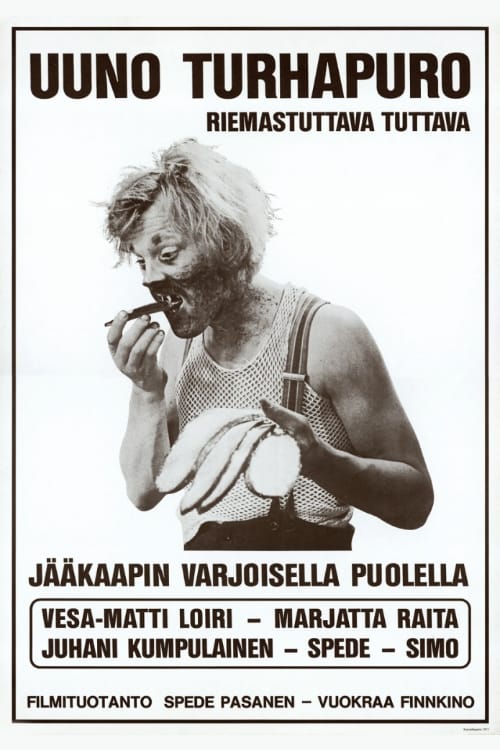
Uuno Turhapuro
1973
No user ratings available yet
Diversity score: 3.1 out of 10

1981
Director
Ere Kokkonen
Runtime
95 minutes
Average Rating
No ratings yetSynopsis
Uuno's nose is proved to be so good, that he can smell behind the display window what goods are on the other side. With this fabulous smell talent Uuno is chosen to Police's police-dog school as a student among the other dogs. Meanwhile Director Tuura, Uuno's father-in-law has been chosen to a very high office and thinks that Uuno is just gaining bad reputation for him, so he decides to broake Uuno's and Elisabet's marriage.
Overall Score
Fair
Category Breakdown
LGBTQ+ Representation
The film focuses entirely on a traditional marital structure. There are no queer themes or non-heteronormative identities present in the cast or plot.
Gender Representation
Uuno Turhapuro subverts traditional masculinity by acting as a perennial loafer rather than a provider. This incompetence deconstructs the archetype of the stable, competent male leader.
Racial & Ethnic Diversity
The cast is predominantly homogeneous, reflecting the 1981 Finnish production context. The narrative lacks intentional intersectional casting or diverse ethnic representation.
Religious & Cultural Diversity
The story offers a comedic critique of the capitalist work ethic. It challenges middle-class domesticity by framing a disregard for authority as a source of agency.
Disability Representation
Uuno's heightened sense of smell is used as a comedic plot device. It does not serve as a meaningful exploration of neurodivergence or physical disability.
Strengths
Areas for Improvement
AI Analysis
The film earns its score through a clever subversion of gendered expectations and social norms. By centering on a protagonist who rejects industriousness, it mocks traditional masculine hierarchies and the rigid capitalist social contract. However, the work remains demographically narrow. It lacks any meaningful LGBTQ+ representation or racial diversity, functioning within a very localized and homogeneous cultural framework typical of its era. While the protagonist's unique sensory talent provides a comedic hook, it fails to offer any substantive engagement with disability or neurodivergence, serving instead as a tool for slapstick.
1973

1986

1984

1975

1978

1992

1982

1977
1983
1998

1990
1969
No reviews yet. Be the first to share your thoughts on this movie!
Use the rating form above to leave a star rating and optional review.