
Os Trapalhões no Reino da Fantasia
1985
No user ratings available yet
Representation score: 3.6 out of 10
Representation Score
Limited
1986
Director
Dedé Santana
Runtime
81 minutes
Average Rating
No ratings yetNew Showbiz Analysis
This film, a product of its time, emphasizes slapstick humor and ensemble dynamics over progressive social commentary. While it features a racially diverse cast, it maintains traditional gender roles and lacks engagement with underrepresented identities or social structures. The work offers a notable ethnic diversity but remains conservative in its approach to gender and social issues.
Category Breakdown
The film does not include any non-straight or non-cisgender identities or same-sex relationships.
The story focuses on male characters who drive the plot, while female characters play minor roles that support the male-dominated humor.
The film includes a racially diverse cast, particularly through the character Mussum, which breaks the mold of a traditionally homogeneous ensemble.
The narrative centers around fantasy elements like wizards and comets, serving as an escape from reality without critiquing social institutions.
The characters are portrayed as typical comedic archetypes without any significant focus on disabilities or neurodivergent traits.
Present on Screen
Limited or Absent
Official Synopsis
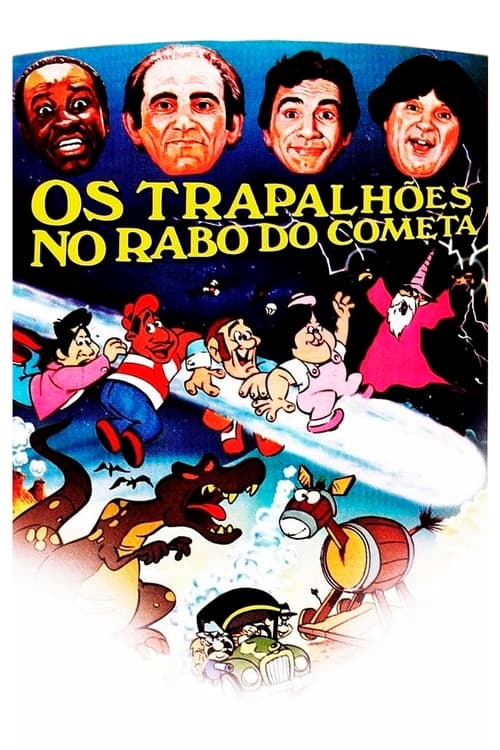
A journey back in time in the form of a cartoon with characterizations of the Trapalhões, from the time of the Roman Empire to the present day, through the Middle Ages, the Old West and the First World War. They begin the film by doing a stand-up show at the Teatro Scala, in Rio de Janeiro, receiving on stage the designer Mauricio de Sousa. From then on, the story unfolds in a cartoon, in which Os Trapalhões is chased by an evil wizard whose aim is to try to hold Didi's (always unsuccessful) hand to rule the world during the passage of the famous Halley Comet.
1985
1975
1977
1968
1989
1984
2009

1988
No reviews yet. Be the first to share your thoughts on this movie!
Use the rating form above to leave a star rating and optional review.