Why Can't I Be Tarkovsky?
2015
No user ratings available yet
Diversity score: 4.4 out of 10
1985
Director
Giorgi Shengelaia
Runtime
105 minutes
Average Rating
No ratings yetSynopsis
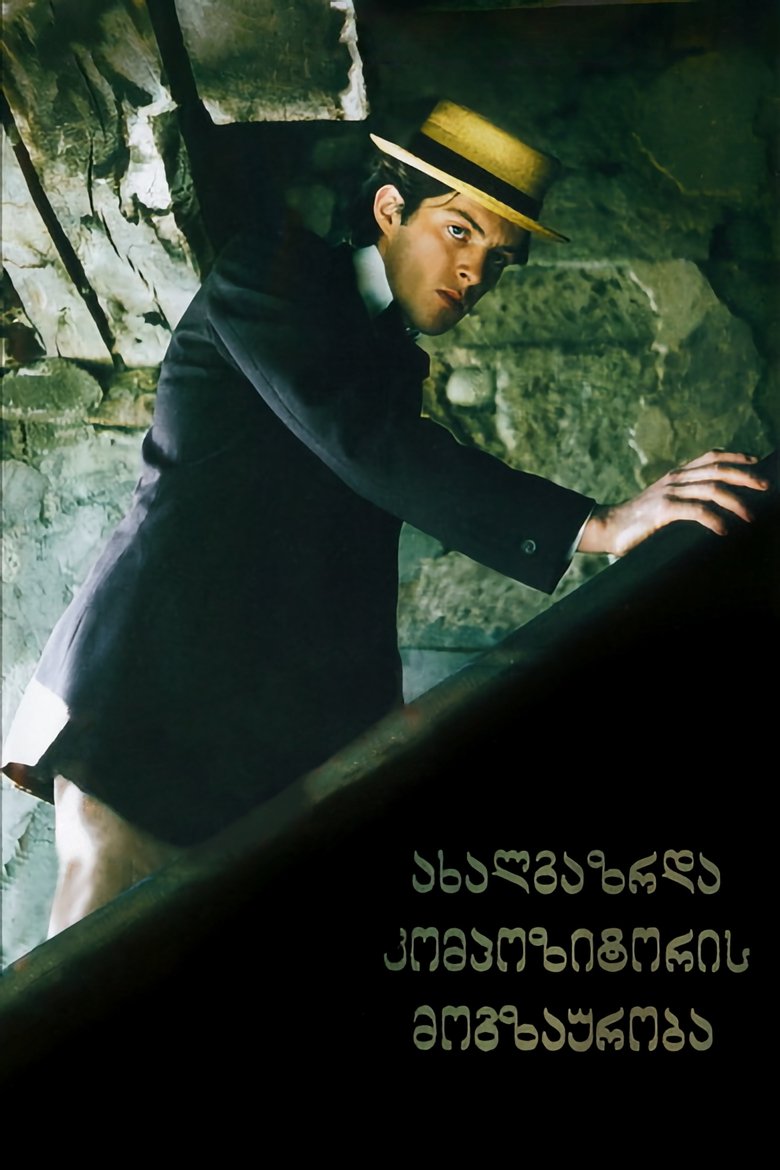
The year is 1907. The young composer Nikusha sets out on a journey over the villages of Central Georgia to record folk songs. For this he provides himself with a map of the places he would like to visit. His accidental co-traveler is Leko Tatasheli who is convinced that the composer is on a mission of the revolutionary committee and his map is the plan of a future uprising…
Overall Score
Good
Category Breakdown
LGBTQ+ Representation
The film features an accidental companionship between two male travelers, Nikusha and Leko. While this provides space for exploring interpersonal dynamics, there is no explicit confirmation of non-cisnormative identities.
Gender Representation
The narrative is primarily driven by male protagonists navigating a journey through rural villages. While women likely appear within the folk-song-recording scenes, central agency remains male-centric.
Racial & Ethnic Diversity
The film celebrates ethnic identity by centering on the preservation of Georgian folk songs. It prioritizes indigenous cultural heritage and regional traditions over Western-centric norms.
Religious & Cultural Diversity
The story explores the tension between traditional life and revolutionary change. It uses folk music to prioritize local identity and critiques established power structures through its characters.
Disability Representation
There is no mention of characters with visible or invisible disabilities within the narrative.
Strengths
Areas for Improvement
AI Analysis
The film excels at cultural specificity, using the preservation of Georgian folk music to anchor its historical setting. By focusing on regional traditions, it offers a meaningful exploration of ethnic identity that resists Western-centric storytelling patterns. However, the narrative agency is heavily concentrated in male characters, reflecting the social constraints of 1907. This creates a gender imbalance in the central driving forces of the plot. While the companionship between the two male leads offers potential for nuanced interpersonal exploration, the lack of explicit LGBTQ+ representation keeps this category at a moderate level.
2015

1983
2006
1970

2006
1980
1939
1973
1966

1962
No reviews yet. Be the first to share your thoughts on this movie!
Use the rating form above to leave a star rating and optional review.