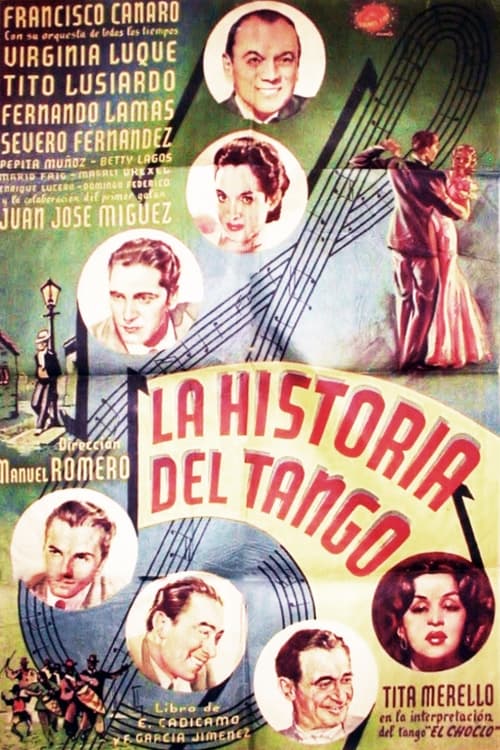
La historia del tango
1949
No user ratings available yet
Diversity score: 2.9 out of 10

1984
Director
Ariel Zeitoun
Runtime
124 minutes
Average Rating
No ratings yetSynopsis
A former singer, who was drafted and fought in the Algeria war, is demobilized and wants to make a come back, which is not easy when you've been gone for twenty-seven months; meanwhile, his kid brother falls in love with his music teacher and is involved in very bad things .Arrested, he is released thanks to the teacher's evidence who provides him with an alibi before leaving him for good.
Overall Score
Limited
Category Breakdown
LGBTQ+ Representation
The film follows a traditional heteronormative trajectory. There is no evidence of queer subtext or non-cisnormative identities within the established plot.
Gender Representation
Madeleine provides a nuanced look at female agency as she evolves from a protégé to an independent woman. However, some mentor-protege dynamics still reflect traditional hierarchies.
Racial & Ethnic Diversity
Set in France, the film focuses on a largely homogeneous white cast. It does not actively seek to diversify the social landscape or include minority perspectives.
Religious & Cultural Diversity
The narrative prioritizes personal history and nostalgia over systemic critique. It explores French society through a lens of sentimentality rather than challenging traditional social orders.
Disability Representation
There are no prominent depictions of physical or neurodivergent disabilities that serve as significant character elements or drive the narrative.
Strengths
Areas for Improvement
AI Analysis
Souvenirs souvenirs is a traditionalist period drama that leans heavily into historical atmosphere and romantic sentimentality. While it offers a meaningful exploration of female maturation through Madeleine, it remains anchored in the social frameworks of its era. The film lacks significant diversity in terms of race and LGBTQ+ representation, focusing instead on a homogeneous French cast and conventional romantic pairings. It functions more as a character study of memory than a tool for social disruption. Ultimately, the work prioritizes the preservation of personal history over the interrogation of systemic structures, making it a classic example of mid-century sentimental storytelling.
1949

1963
1979

1967
1981
1970
No reviews yet. Be the first to share your thoughts on this movie!
Use the rating form above to leave a star rating and optional review.