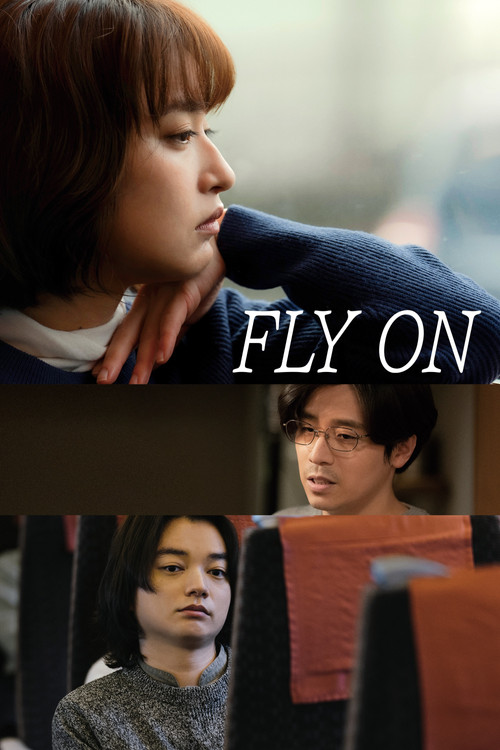
Fly On
2023
No user ratings available yet
Representation score: 5.3 out of 10
Representation Score
Fair
2010
Director
Itsumichi Isomura
Runtime
110 minutes
Average Rating
No ratings yetNew Showbiz Analysis
Piecing Me Back Together is a conventional character study focusing on psychological recovery. The film highlights meaningful female-led perspectives by placing women in roles of emotional and intellectual navigation. However, the narrative lacks multi-layered complexity and stays focused on individual grief rather than broader social issues. While it explores neurocognitive disability through amnesia, it adheres to traditional genre clichés without broader social commentary.
Category Breakdown
The story centers on a heterosexual relationship between Izumi and Junichi. There are no representations of LGBTQ+ identities or critiques of the assumption that everyone is straight or cisgender.
Women play key roles in driving the plot through Izumi's trauma and Makiko's professional investigation. The film avoids patriarchal dominance, though it lacks stable male characters, resulting in a neutral score.
The cast appears to be culturally uniform, fitting the Japanese setting. The film does not blend identities or disrupt traditional casting norms.
The drama follows a conventional storyline of personal loss and memory. It does not critique institutional power, Western influence, or traditional morality.
Post-traumatic amnesia is the central plot driver for Izumi. However, it is unclear if the condition is used as a narrative device or given full significance.
Present on Screen
Limited or Absent
Official Synopsis
A young woman named Izumi suffers the loss of her boyfriend Junichi, who died from a fatal motorcycle accident. The shock from her boyfriend's sudden death causes Izumi to lose her memory from the time of the accident. A lawyer named Makiko then helps Izumi to remember the final moments of her boyfriend's life.
2023

1998

2020

2004

2001

2020
2022
2012
No reviews yet. Be the first to share your thoughts on this movie!
Use the rating form above to leave a star rating and optional review.